The New Luxury Is Permission
Modern luxury has nothing to do with price tags and velvet ropes. It's about designing spaces where people finally feel allowed to be themselves.

"Hospitality is present when something happens for you. It is absent when something happens to you." ~ Danny Meyer
We've been getting luxury wrong for decades.
Not just a little wrong. Fundamentally, structurally wrong. We've confused it with price tags and velvet ropes, with logos that scream and materials that gleam. We've built an entire industry around the idea that luxury is something you buy, when in fact, it's something you're granted.
Permission.
That's what modern luxury actually is. Permission to belong. Permission to slow down. Permission to be seen, understood, and remembered, not as a demographic or a transaction, but as a whole person. And the brands that understand this aren't selling you products or services. They're designing moments where you finally feel safe to be yourself.
The Problem with Performative Luxury
Walk into most "luxury" hotels and you'll know exactly what I mean by performative luxury. The towering floral arrangements that cost more than most people's rent. The lobby designed to be photographed, not inhabited. The staff trained to be gracious but generic, delivering service that feels rehearsed rather than real.
It's impressive. It's expensive. And it's exhausting.
Because performative luxury asks something of you: witness me, appreciate me, post me. It demands performance from the guest in return. Dress right, act right, prove you belong here. It's luxury as gatekeeping, as anxiety management, as social theater.
Compare that to the private lounge at Cathay Pacific's The Pier in Hong Kong. You step off a long-haul flight into what feels less like an airport space and more like a friend's impossibly well-appointed living room. There's no grand entrance, no moment designed for Instagram. Just quiet corners, perfect lighting, and the unspoken understanding that you're allowed to exhale here. The luxury isn't in the marble or the menu. It's in the permission to be tired, rumpled, human.
That's intentional luxury. It whispers instead of shouts. It removes friction instead of adding spectacle. It says: you don't have to prove anything here.
Three Pillars of Permission
Access: The Luxury of Less
Real luxury today isn't about gaining access to everything. It's about having permission to access less, better.
Consider the rise of private terminals at airports. Not because they're flashier than traditional first-class lounges, but because they eliminate the fundamental friction of travel: other people's chaos. You're not buying a nicer experience of the airport. You're buying permission to skip the airport entirely.
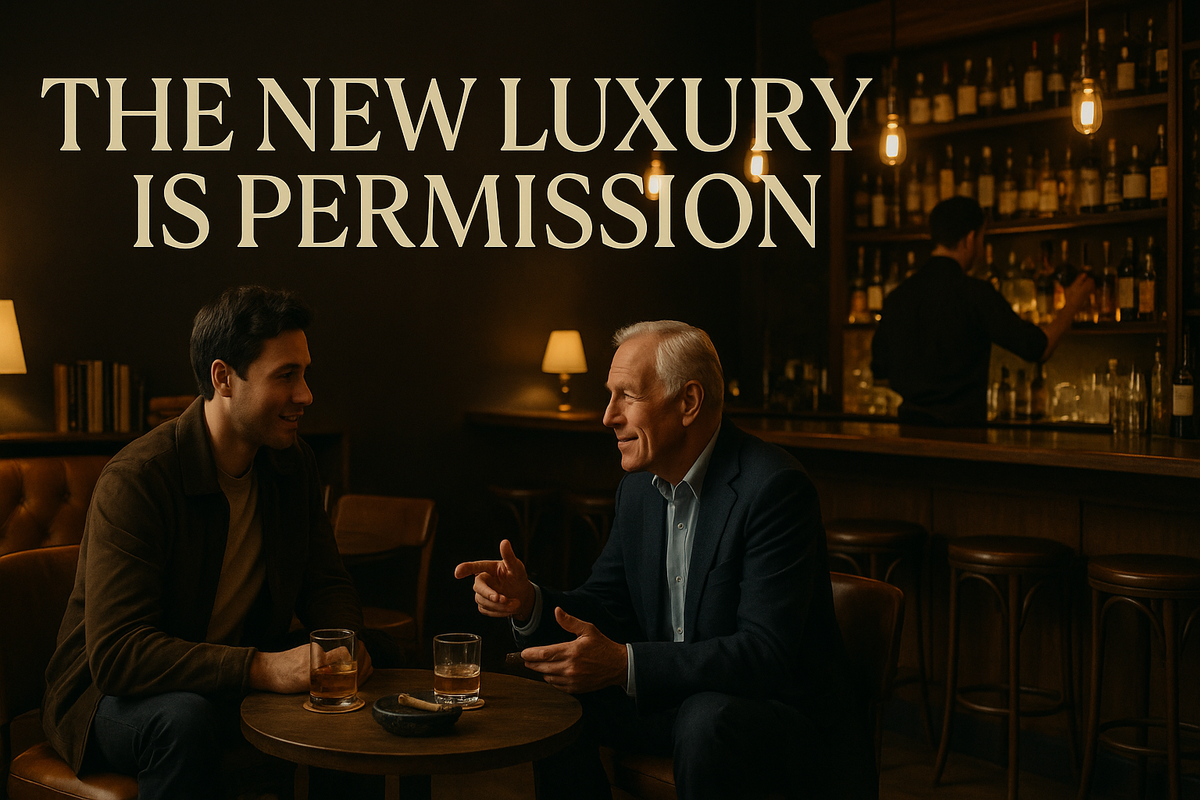
Or look at the best cigar lounges. Not the garish ones with gold-plated ashtrays and celebrity photos on the walls, but the quiet ones where you can actually think. These spaces understand that the luxury isn't the cigar itself. It's the permission to spend two unhurried hours doing nothing but enjoying it. To opt out of productivity culture. To be present without apology.
The ritual becomes the filter. You can't rush a cigar. You can't optimize it or hack it or scroll through it. And in that forced slowness, the space grants you something rare: permission to simply be.
Or consider Equinox's transformation of the gym from utilitarian space into what they call a "temple of well-being." Members aren't paying for fancier equipment. They're paying for permission to prioritize their bodies without apology, to spend two hours on themselves without guilt. The luxury is the license to care that much.
The brands getting this right understand that access isn't about opening more doors. It's about closing the ones that don't serve you.
Personalization: Technology as Translator, Not Replacement
Here's where most brands stumble: they think personalization means automation. It doesn't.
The Ritz-Carlton's legendary guest preference system isn't impressive because it's technologically sophisticated. It's impressive because it gives staff permission to remember you. The technology tracks that you prefer down pillows and sparkling water, yes. But the magic happens when a housekeeper uses that information to anticipate what you need before you ask for it. The system doesn't replace human judgment; it enhances it.
This is personalization as translation. Technology helping humans understand humans better. Not algorithms making decisions, but algorithms giving people the information they need to make more thoughtful decisions.
Think about the difference between these two experiences:
You walk into a coffee shop you've never visited before. The barista greets you professionally, takes your order efficiently, and hands you a numbered receipt. The drink is perfect. The transaction is flawless. You leave. Next week, you return and the entire interaction repeats, identically. You remain a transaction.
Now contrast: You walk into a different shop. The barista makes eye contact, asks a question about your day, mentions they're trying a new Ethiopian roast if you're feeling adventurous. You talk. Next week when you return, they remember your name. The week after, they remember you liked that Ethiopian and have set aside a bag before they sold out. You've become a person.
Same product. Entirely different permission structure. One grants you permission to be a customer. One grants you permission to be known.
Real personalization doesn't create efficiency. It creates intimacy. And that intimacy, being recognized as yourself rather than as a customer profile, is what people are actually paying for when they choose one experience over another.
Belonging: Intimacy at Scale
The most profound shift in luxury isn't happening in what brands offer. It's happening in how they make people feel.
Soho House succeeded not because it created beautiful spaces, though it did, or offered exclusive amenities, though it does. It succeeded because it gave a specific tribe of creative professionals permission to belong somewhere. To gather without agenda. To work without being at work. To be among "their people" without having to explain who their people are.
The luxury isn't the furniture or the food. It's the feeling of walking in and thinking: yes, this is for me.
But here's what's interesting: the future of luxury isn't just about finding your tribe. It's about spaces that give you permission to be more than your tribe. To be complicated. To contain multitudes.
The best hospitality spaces create what you might call "structured serendipity." Design that encourages unexpected connection. The bar layout that puts strangers in proximity. The communal table that forces conversation. The lighting and acoustics that make talking to the person next to you feel natural, not awkward.
These design choices aren't about forced community building. They're about removing the social friction that prevents us from acting on our better impulses. They grant permission to be the version of yourself that actually talks to strangers, that takes small social risks, that remains open to surprise.
Small, thoughtful brands understand this instinctively. Blue Bottle Coffee in its early days didn't just make good coffee. It created spaces where being particular about coffee was not just accepted but celebrated. You were granted permission to care deeply about seemingly small things.
Aesop stores don't just sell skincare. They give you permission to slow down the mundane ritual of washing your hands, to find meaning in the everyday. The store design, the unhurried staff, the quality of the conversation. Everything signals that you're allowed to take this seriously.
These brands succeed because they understand something fundamental: belonging isn't about exclusion. It's about recognition. It's about walking into a space and having it reflect something true about who you are or who you want to be.
The Hidden Dimension
In brand strategy and experiential design, we've been staring at the outside surfaces of luxury for so long that we forgot to look inside.
The outside surfaces are easy to count: price, materials, square footage, thread count, Michelin stars. But the inside surfaces, the ones that actually matter, are harder to see and harder to design for.
Permission to belong without performance. Permission to want what you want without justification. Permission to be tired, particular, human, seen. Permission to slow down when everything says speed up. Permission to connect when everything says stay guarded.
These aren't metrics you can track or features you can photograph. But they're what people are actually buying when they choose one experience over another. The brands winning today understand that the constraint isn't budget. It's emotional license. People don't need fancier things. They need permission to feel things.
Design as Destiny
None of this happens by accident. Creating permission requires intentional design choices.
Consider two hotel bars:
The Performative Bar: Bright, loud, optimized for Instagram. Music chosen for brand compliance, not emotional resonance. Seating designed for groups who arrived together. Bartenders trained to be efficient, not engaged. Every design choice optimized for throughput, turnover, maximum revenue per square foot.
The Intentional Bar: Lighting that's dim enough for intimacy but bright enough to see faces. Acoustics that allow conversation without shouting. A mix of booth seating and bar seats that puts strangers in proximity. Bartenders given permission to slow down, remember regulars, suggest something unexpected. Music at a volume that creates atmosphere without preventing connection.
One creates transactions. One creates moments. One reinforces anxiety. One grants permission.
The difference isn't budget. It's philosophy. It's understanding that people come to hospitality spaces for something they can't get anywhere else: permission to be a version of themselves they can't access in regular life.
The executive who needs permission to be unpolished. The introvert who needs permission to be seen. The perpetually busy person who needs permission to do nothing. The perpetually lonely person who needs permission to connect.
Your design choices either grant these permissions or they don't. The lighting either makes people feel safe or exposed. The music either enables connection or prevents it. The seating either encourages interaction or isolates. The staff either has permission to be human or doesn't.
These aren't details. They're the entire point.
The Business Model Shift
Traditional luxury optimizes for extraction: maximum revenue per guest, faster table turns, standardization for scale. It measures success in transaction volume and profit margins.
The new luxury optimizes for return: return visits, return on relationship, return to a version of yourself you'd forgotten was possible. It measures success in depth, not breadth.
This requires a different mindset. You're not a service provider anymore. You're a steward. You're not maximizing efficiency. You're cultivating conditions. You're not selling access. You're granting permission.
And paradoxically, this is what makes it work as business. People don't return to perfection. They return to places that make them feel something. That let them be something. That give them permission to access parts of themselves that normal life keeps locked away.
The Shift
So here's the perspective shift for anyone building brands or designing experiences: stop asking "how do we make this feel more luxurious?" and start asking "what are we giving people permission to do, feel, or be?"
Stop designing for the Instagram moment and start designing for the moment after, when the guest is alone, when the performance ends, when they're just themselves.
Stop adding features and start removing friction. Stop building barriers and start creating belonging. Stop making people prove they deserve luxury and start designing spaces where they're allowed to receive it.
Because here's what the old model misses: luxury has never been about having more. It's about being allowed to be more. More yourself, more present, more honest, more human.
The rope holding us isn't the cost of luxury. It's the belief that luxury must be earned, justified, performed. That it must look a certain way to count. That it requires sacrifice or status or size.
But what if luxury is simply permission? Permission granted by a space, a brand, a moment that says: here, you're allowed.
You're allowed to rest. You're allowed to want this. You're allowed to belong. You're allowed to take up space. You're allowed to be exactly who you are, without apology or explanation.
"We're not in the business of serving food. We're in the business of making people feel seen." ~ Will Guidara