You Are Not the Boss... If You Have to Tell People You Are
When you announce your authority before you've earned it, you're not climbing. You're excavating.

Real Authority Doesn't Announce Itself
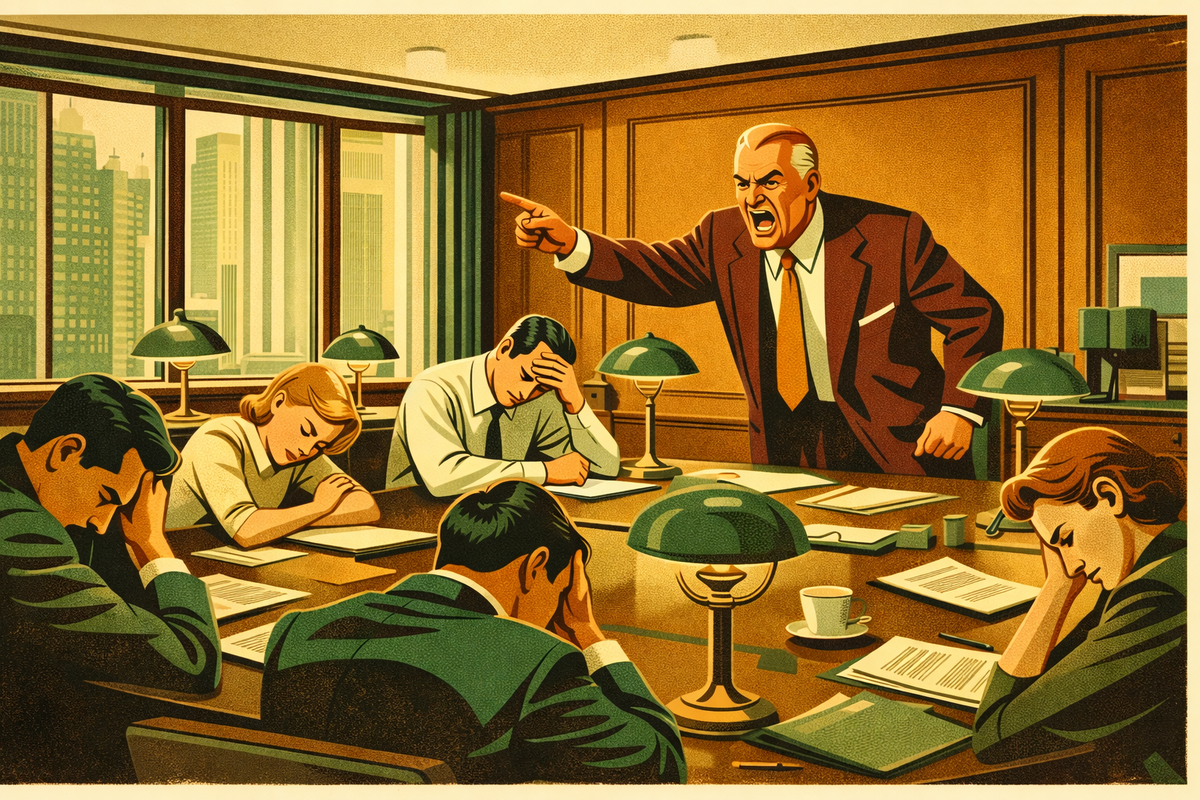
If you walk into a room and the first thing out of your mouth is "I'm in charge here," you've already lost. Not the argument. Not the respect. The room itself.
Because leadership (actual leadership, the kind that gets things done and builds something lasting) is felt, not declared. The moment you have to tell someone you're the boss, you're admitting something far more damaging than you realize: you don't actually hold the authority you're claiming.
Think about the people in your life who genuinely command respect. Your best teachers, coaches, mentors, managers. How often did they have to remind you of their position? Probably never. Their authority came from competence, consistency, and the fact that they made you better at what you were trying to do. You followed them because not following them would have been stupid.
Now think about the people who constantly reminded you they were in charge. How'd that work out?
Starting at the Top (When You're Digging a Hole)
Matt Furey puts it perfectly: "Nobody begins at the top except when digging a hole."
When you announce your authority before you've earned it, you're not climbing. You're excavating. Every time you have to say "I'm the boss" or "Do you know who I am?" or "I'm the one who signs your paycheck," you're digging deeper.
Real leaders start at the bottom. Not because they lack confidence, but because that's where the work is. That's where you learn the terrain, understand the problems, and earn the trust of the people who'll eventually follow you. You can't skip that part. You can try (plenty of people do) but all you're doing is creating a crater where a foundation should be.
Authority built on announcements is authority built on nothing. It's smooth, hollow, performative. And the first time it faces real pressure, it collapses.
The Death of Knowing It All
Matt Furey's second insight cuts even deeper: "Any time you think you know it all, you're dead."
This is where announced authority becomes fatal. Because the person who has to tell you they're the boss has usually stopped learning. They've decided they've arrived. They know how things work. They've got it figured out.
And that's the moment they become useless.
Real authority comes from pattern recognition, from seeing what others miss, from understanding that every situation is different even when it looks the same. The "difficult artist whisperer" doesn't become the difficult artist whisperer by announcing credentials. You become that person by listening, adapting, learning what works in this specific situation with this specific human being.
The moment you think you know it all, you stop seeing. You stop listening. You start running on autopilot, applying yesterday's solutions to today's problems. And when that stops working (which it will), you don't have the humility to adjust. Instead, you double down. You announce your authority louder. You remind people of your title, your experience, your track record.
I've watched this play out hundreds of times over three decades in live entertainment. The technical director who's done a thousand shows exactly the same way and can't understand why this one isn't working. The producer who knows what audiences want and doesn't bother asking what this audience actually needs. The manager who's been in charge for twenty years and mistakes longevity for competence.
They all share the same tell: they have to keep reminding people they're in charge. Because somewhere deep down, they know they've stopped growing. And when you stop growing, your authority starts eroding. The announcement is the sound of someone trying to hold onto something that's already slipping away.
The Leader People Barely Notice
Lao Tzu understood this better than almost anyone: "A leader is best when people barely know he exists, when his work is done, his aim fulfilled, they will say: we did it ourselves."
Read that again. The best leaders are barely noticed. When the work is complete, the team takes credit.
This is the opposite of announced authority. This is leadership so effective it erases itself from the narrative.
You've created conditions so perfect, built infrastructure so seamless, removed obstacles so completely that the people you're leading feel empowered rather than managed. They succeed and think it was their own competence. Which, in a way, it was. Because you made it possible for their competence to actually matter.
This is the 90-minute window done right. The audience doesn't walk out of a great show thinking about the sound engineer or the lighting designer or the stage manager. They walk out transformed, feeling like they just experienced something profound. They become the hero of their own story.
That's not an accident. That's the result of someone who understands that real authority operates through capability, not declaration. Someone who's focused on the outcome, not the credit. Someone who knows that the best leadership makes itself unnecessary.
Why Announcing Authority Reveals Its Absence
When you have to tell people you're in charge, you're revealing something you probably don't want them to know. You're insecure about your position. You're worried people won't listen. You're compensating for a lack of actual influence with a volume increase on your title.
It's the professional equivalent of a teenager saying "I'm not scared" in a voice that's definitely scared.
Authority is demonstrated, not declared. It shows up in how you make decisions, how you treat the people who can't do anything for you, whether your team trusts your judgment, whether they come to you with problems, whether they follow your lead because not following would make their jobs harder.
None of that requires an announcement. In fact, the announcement undermines it.
Because here's what everyone hears when you say "I'm the boss": I'm worried you don't think I'm the boss. I need to remind you because I'm not confident you'll remember. I'm threatened by the idea that my authority might be questioned.
And once people hear that? You've lost them. Not because they're insubordinate or disrespectful, but because you've shown them something true about yourself. You don't actually have the authority you're claiming. You have a title. Those aren't the same thing.
The Texture of Real Leadership
I've spent thirty years in live entertainment watching the difference between titles and actual leadership play out in real time. You learn fast in this industry. A bad leader doesn't just make people unhappy. A bad leader creates disasters. Shows fail. Equipment breaks. Artists walk. Audiences leave disappointed.
The best leaders I've worked with (the ones who consistently pulled off the impossible, who built teams that would run through walls for them, who made magic happen night after night) almost never talked about being in charge. They talked about the work. They asked questions. They listened to the crew member who'd been doing this for six months and actually heard what that person was saying.
They had texture. Earned respect that came from proven ability and consistency. When they gave direction, people followed because experience had taught them this person knew what they were talking about. When they made a call, people trusted it because track record proved they got it right more often than not.
Compare that to the announced leaders. They're easy to spot. They're the ones constantly reminding you of the org chart. They're the ones who say "because I said so" when questioned. They're the ones who confuse compliance with respect.
Their teams don't follow them. Their teams avoid them. And when crisis hits (which it always does in live entertainment), those teams don't rally. They scatter. Because there's no foundation. Just a title someone's desperately trying to make matter.
The Physics of Authority
Real authority accumulates through consistent action over time. Every good decision, every problem handled well, every moment you put the team before your ego adds weight to your influence. It compounds. It builds.
Announced authority tries to skip that process. It attempts to claim the end result without doing the work. And just like you can't start a building from the roof down, you can't build real influence by declaring it exists.
This is why the Furey quotes matter. You can't begin at the top unless you're digging. You're dead the moment you think you know it all. Both insights point to the same truth: real leadership is built from the ground up through humility, learning, and consistent capability.
The person who has to announce they're the boss hasn't done that work. They're trying to shortcut their way to influence. And everyone can tell.
What Real Authority Actually Looks Like
Real authority is silence when you could speak. Asking questions when you could give orders. Making someone else the hero when you could take credit.
It's the stage manager who never raises their voice because they've built a team that trusts their judgment. It's the technical director who listens to the newest crew member's concern about a rigging point because expertise doesn't care about seniority. It's the producer who takes responsibility when something goes wrong and deflects credit when something goes right.
None of this is soft. None of this is weak. This is harder than announcing you're in charge, because it requires actual skill. You can't fake your way through listening. You can't perform your way through building trust. You can't announce your way into respect.
You have to earn it. Every single day.
The Hospitality Principle
The best service is invisible. You don't notice great hospitality because you're too busy having a great experience. The waiter who anticipates your needs before you ask. The hotel staff who handles problems before you know they existed. The host who makes you feel like you belong without ever making you conscious of the effort involved.
Leadership works the same way.
When I'm running a show, my job isn't to make sure everyone knows I'm in charge. My job is to create conditions where the artists can do their best work, where the crew can operate at peak efficiency, where the audience gets the transformative experience they came for. If I'm doing that job well, I'm barely visible.
The artists feel supported, not managed. The crew feels empowered, not micromanaged. The audience never thinks about the infrastructure that made their evening possible. They just know they had an incredible time.
That's leadership. And it requires exactly zero announcements.
Real leaders understand they're in service to something larger than themselves. The mission. The team. The outcome. Their authority exists to make that thing possible, not to make themselves feel important.
The Question That Reveals Everything
Here's a diagnostic: when something goes wrong, what's your first instinct?
Is it to figure out who's responsible and make sure everyone knows it wasn't you? Or is it to solve the problem?
Is it to remind people that you're in charge and this wouldn't have happened if people had listened to you? Or is it to understand what broke down and prevent it from happening again?
Is it to protect your authority? Or is it to serve the mission?
That instinct tells you everything about whether you actually have authority or just a title you're desperately trying to defend.
Real leaders don't protect their authority because they don't need to. Their authority is demonstrated every time they make a good decision or prioritize the team over their ego. It's self-reinforcing. It grows stronger through use, not through declaration.
Announced leaders protect their authority constantly because it's all they have. Take away the title, and there's nothing underneath. No track record. No reservoir of trust. No foundation of respect earned through consistent action over time.
The Work Speaks
You're not the boss if you have to tell people you're the boss. You're just someone with a title trying to convince themselves it matters.
Real authority is demonstrated in every decision you make, every moment you choose the mission over your ego. People follow you not because you told them to, but because experience has taught them that following you is the smart play.
Nobody begins at the top except when digging a hole. The moment you think you know it all, you're dead. And the best leaders are the ones people barely notice, who create conditions so perfect that teams take credit for their own success.
You want real authority? Stop announcing it. Start earning it. Do the work. Build the foundation. Make decisions that prove you know what you're doing. Create an environment where capability matters more than titles and outcomes matter more than credit.
And then, when someone asks who's in charge, let your team answer for you.
Because if you've done the work right, they already know. And more importantly, they're glad it's you.
The best leadership erases itself from the narrative. The work speaks. The results speak. The team speaks.
You don't have to say a word.