The Psychology of Sound: How Acoustic Design Shapes Guest Experience
For every additional 15 minutes guests remain comfortable in your space, average check size increases. This isn't about manipulating behavior. This is about removing the invisible barriers that make people want to flee. The invisible architecture just made you money.

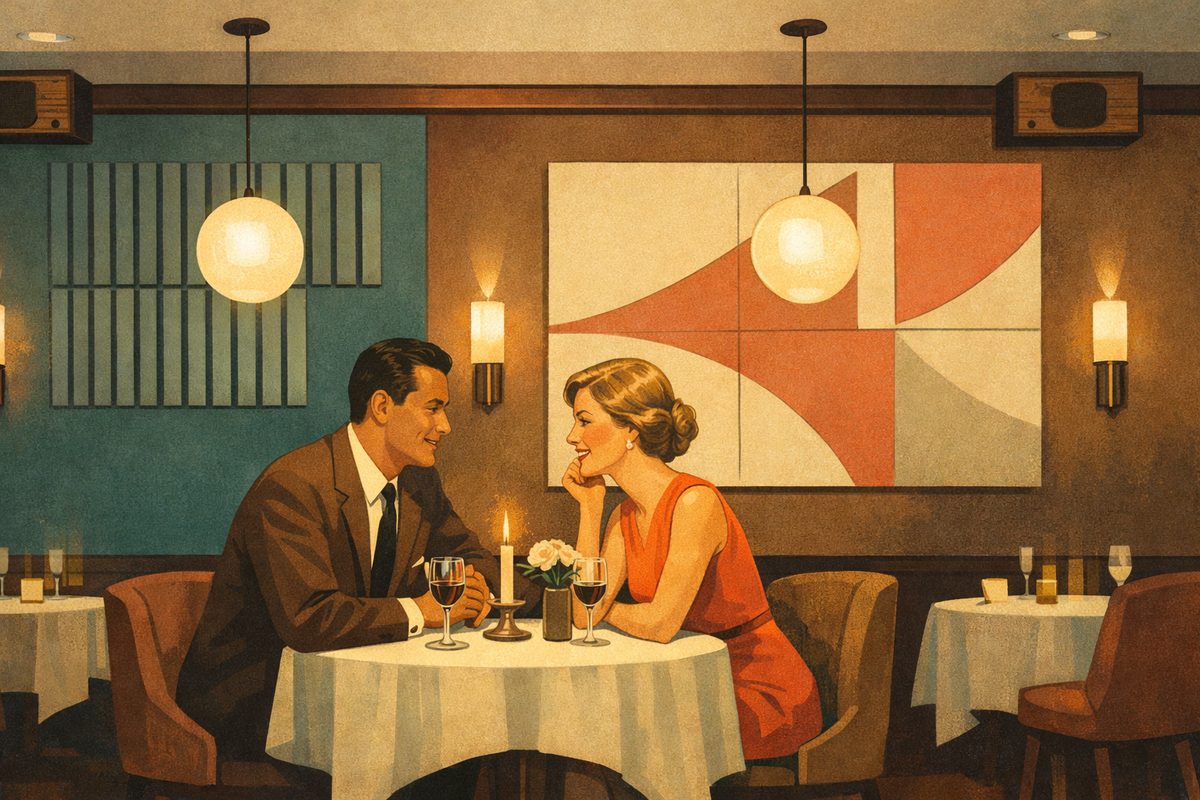
I walk into the restaurant and immediately notice the wiring. Not dangling exactly, but routed poorly. Visible where it shouldn't be, speaking to choices made for installation convenience rather than guest experience. The pendant lights are stunning, hung at exactly the wrong height. The space photographs beautifully. I haven't sat down yet and I already know how this ends.
Then I'm sitting across from someone I care about. The food is excellent. But my nervous system is screaming at me to leave. I can't quite hear what they're saying over the din. I'm leaning in, asking "what?" for the third time. My shoulders are up around my ears. The music isn't even that loud, but somehow the whole room feels like it's vibrating at the wrong frequency.
I leave exhausted. The food was great. I can't remember a single thing we talked about. I won't be back.
But when it's right? When the invisible architecture actually works? I splurge on the extra drink. I justify the slightly over-market-price steak. I tip 30% instead of 20% and write a positive Yelp review. Best of all, I come back and bring my friends.
This is my occupational hazard: I see the invisible infrastructure everyone else ignores. The wiring bothers me as much as the bad acoustics, not because I'm precious about technical perfection, but because both reveal the same failure. A lack of understanding that micro-psychological units compound into the entire guest experience.
That exposed wire isn't just aesthetically wrong. It's a tiny stress signal. The pendant height isn't just a design choice. It's directing sound exactly where it creates maximum chaos. The hard surfaces aren't just beautiful. They're turning human voices into weapons against human connection.
Each small thing registers subconsciously. Together, they become the reason guests don't return.
Because here's what matters: everything we design should be in service of human connection. That's the actual job. Not beautiful Instagram moments. Not awards from design publications. The question is simple: does this space help two people connect, or does it get in the way?
The wiring, the acoustics, the light placement. These aren't separate systems. They're all part of the invisible architecture that either facilitates connection or destroys it.
What Your Brain Is Actually Doing
So what's happening in your brain when you walk into that acoustically chaotic restaurant? Why does your body know something is wrong before you consciously register the problem?
Your brain is performing an extraordinary feat of signal processing called the cocktail party effect. In any environment with multiple sound sources (conversation, background music, kitchen noise, other diners) your auditory cortex is constantly filtering signal from noise, isolating the voice of the person across from you from everything else competing for your attention.
In a well-designed acoustic environment, this happens almost effortlessly. Your brain does the work, but it's not exhausting. The reverberation time is controlled. Hard surfaces aren't creating chaotic reflections. The music isn't competing with conversation in the same frequency range. You can hear your companion clearly without straining.
In a poorly designed space, your brain is burning calories at an alarming rate. Every sentence requires active filtering. Your auditory cortex is working overtime to separate your companion's voice from the cacophony of reflected sound bouncing off hard surfaces. The background music is occupying the same frequency range as human speech, forcing your brain to work even harder to isolate what matters.
This isn't a minor inconvenience. This is your nervous system activating low-level stress responses.
Research from environmental psychology shows that prolonged exposure to acoustically challenging environments triggers the same physiological stress markers as other environmental stressors: elevated cortisol, increased heart rate, muscle tension. That's why your shoulders are up around your ears. That's why you leave exhausted even though you were just sitting and eating.
Your body is treating the acoustic environment as a threat.
Frequency and Emotion
Not all sound affects us the same way. The frequency content of your acoustic environment has a profound impact on how you feel, and most designers have no idea this variable even exists.
Low frequencies create intimacy. When a space has properly managed low end (not boomy, not absent, but present and controlled) it creates a sense of warmth and enclosure. This is why the best jazz clubs and whiskey bars feel so inviting. The acoustic signature includes lower frequencies that our brains associate with safety and connection.
High frequencies create energy, and in excess, anxiety. Hard surfaces reflect high frequencies more efficiently than low ones. Glass, marble, exposed concrete. These are acoustically reflective materials that emphasize the upper midrange and high frequencies. The result is a space that feels bright, energetic, and if unchecked, aggressive.
Walk into a restaurant with floor-to-ceiling windows, concrete floors, and hard surfaces everywhere. The acoustic signature will be dominated by high-frequency reflections. Human voices, which contain significant energy in the 2 to 4 kHz range, bounce off every surface and create a wash of harsh, fatiguing sound.
Your brain interprets this as chaos. Not consciously. You don't think "there's too much energy in the 3 kHz range." You just feel uncomfortable, on edge, anxious to leave.
The difference between a space that feels warm and inviting versus cold and aggressive often comes down to reverberation time across different frequency bands. A well-designed space will have controlled reverberation in the low end (preventing boominess), managed midrange (where conversation lives), and dampened high frequencies (preventing harshness).
The business impact is measurable. Spaces with excessive high-frequency energy have shorter average dwell times. Guests order fewer rounds. The experience feels transactional rather than transformative. All because the frequency balance is creating a low-level anxiety response that guests can feel but can't name.
The Invisible ROI
Here's what most designers and operators don't understand: acoustic comfort has a direct, measurable impact on revenue.
Studies on dwell time in restaurants and bars consistently show that acoustic comfort correlates with increased spending. For every additional 15 minutes guests remain comfortable in your space, average check size increases. They order the second bottle of wine. They say yes to dessert. They linger over after-dinner drinks.
This isn't about manipulating behavior. This is about removing the invisible barriers that make people want to flee.
When your acoustic environment is right, several things happen simultaneously.
Guests relax. Their nervous system isn't fighting the environment. They sink into the experience rather than enduring it.
Conversation flows naturally. They're not straining to hear, not repeating themselves, not leaning in uncomfortably close. The infrastructure is invisible, which means it's working.
Memory formation is tied to emotional state. When people are relaxed and connected, they encode the experience more vividly. They remember the conversation, the laughter, the moment of connection. Not just "the food was good but I left exhausted."
They attribute the entire experience to your space. Nobody walks out thinking "wow, the acoustic design was exceptional." They think "that was an incredible evening." The acoustic comfort disappears into the overall experience, which is exactly what should happen.
And then they come back. They bring friends. They write positive reviews that mention "great atmosphere" without being able to articulate why. They become advocates for your space because you created an environment where human connection could actually happen.
The invisible architecture just made you money.
What Designers Can Control
The good news is that acoustic design isn't mysterious or expensive when you understand the variables that matter.
Reverberation time is the single most important metric. This is how long it takes for sound to decay in your space. Too long and the space feels chaotic, with sound building up and creating a wash of noise. Too short and it feels dead, uncomfortable, like talking in a padded cell.
The target reverberation time depends on the purpose of your space. Fine dining wants shorter reverberation (0.6 to 0.8 seconds) to facilitate intimate conversation. A lively bar can handle longer reverberation (1.0 to 1.4 seconds) because energy and excitement are part of the experience.
Surface materials determine how sound behaves in your space. Hard, reflective surfaces (glass, concrete, metal, hardwood) reflect sound, particularly high frequencies. Soft, absorptive materials (fabric, acoustic panels, carpet, upholstered furniture) absorb sound.
Here's what matters: you can work with even the most reflective spaces to create pleasant acoustic environments. The mistake isn't choosing hard surfaces. It's choosing them without understanding their acoustic impact and designing accordingly.
A restaurant with floor-to-ceiling windows, concrete floors, and exposed brick can be acoustically comfortable if you understand what you're working with. Strategic placement of absorptive materials can balance the reflective surfaces and manage reverberation time. Upholstered banquettes become both comfortable seating and acoustic treatment. Ceiling treatments disguise themselves as design elements. Carefully selected artwork incorporates acoustic backing. Even plants serve double duty as visual softness and sound absorption.
The failure happens when designers choose all hard surfaces because they photograph beautifully, then ignore the acoustic consequences entirely. Acoustic treatment should be integrated into the design from the beginning, not applied as a band-aid afterward.
Some of the most acoustically successful spaces I've experienced were predominantly hard surfaces. They just understood that every reflective surface requires a corresponding strategy for managing what it reflects.
Volume and spatial geometry matter enormously. High ceilings can be beautiful, but they also increase reverberation time and create acoustic challenges. Low ceilings can feel intimate but also trap sound if not properly managed.
The best spaces use volume strategically. Higher ceilings in entry areas create a sense of grandeur, while lower ceilings in dining areas create intimacy and acoustic control. Varied ceiling heights across a space allow sound to behave differently in different zones.
Speaker placement and system design should serve the acoustic goals of the space, not fight against them. This is where the integration of visual and acoustic design becomes critical.
Speakers placed for aesthetic reasons rather than acoustic coverage create hot spots (too loud) and dead zones (too quiet), forcing operators to turn the system up to compensate, which makes the hot spots even worse. But the solution isn't to compromise the visual design by mounting ugly boxes wherever they provide the best coverage.
The solution is to design the sound system as part of the aesthetic from the beginning. I've written before about how loudspeakers can be beautiful, integrated design elements rather than technical compromises. Modern speaker technology allows for remarkable flexibility. Architectural speakers can integrate into ceilings, walls, even furniture in ways that enhance rather than compromise the design. Custom enclosures can match materials and finishes. Linear arrays can be designed as architectural elements that contribute to the visual language of the space.
When sound system design is integrated early, the speakers become part of the intentional design rather than afterthoughts bolted onto finished surfaces. A properly designed system should be invisible, not because it's hidden, but because it's so well integrated it feels like it belongs. Distributed coverage that provides even sound levels throughout the space at volumes that enhance rather than compete with conversation.
The litmus test is simple: does the sound system look like it was designed for this space, or does it look like it was added after the fact?
The Spaces That Get It Right
The best examples of acoustic design aren't the ones that announce themselves. They're the spaces where you don't notice the acoustics at all, which means they're working perfectly.
Think about the restaurant where conversation flows effortlessly even when the room is full. Where you can hear your companion clearly without raising your voice. Where the music enhances the atmosphere without dominating it. Where you lose track of time because you're actually present in the moment rather than fighting the environment.
That's not luck. That's intentional acoustic design.
I've watched identical floor plans perform completely differently based solely on acoustic treatment. Same layout, same furniture, same visual design. One space is always full, guests linger, checks are higher. The other struggles, turns tables quickly because nobody wants to stay, can't understand why they're not performing.
The difference is invisible infrastructure. Acoustic panels integrated into the design. Strategic use of absorptive materials. Reverberation time managed across frequency bands. Speaker placement that serves coverage rather than aesthetics. Sound system components chosen to complement the visual design rather than compromise it.
The space that gets it right isn't doing anything flashy. They just understood that human connection requires acoustic comfort, and they designed for it from the beginning. The acoustic elements don't hide. They integrate. They become part of the visual story the space is telling.
When you walk in, you don't notice the speakers because they look like they belong there. You don't notice the acoustic panels because they read as intentional design elements. You don't notice the carefully balanced mix of hard and soft surfaces because the whole composition feels cohesive.
What you notice is that you feel comfortable. That conversation flows. That the music enhances rather than intrudes. That you want to stay.
Your guests can't tell you why they felt uncomfortable in your beautiful space. They don't have the vocabulary to explain that the reverberation time was too long or that high-frequency reflections were creating acoustic fatigue.
They just know they don't want to come back.
The invisible systems that shape human experience (the wiring, the acoustics, the way light and sound and spatial geometry interact) aren't details. They're the foundation of whether your space facilitates connection or destroys it.
Every micro-psychological unit compounds. The exposed wire creates a tiny stress signal. The pendant height directs sound poorly. The hard surfaces turn voices into chaos. Together, they become the reason a beautiful space fails.
But when you get it right, when the invisible architecture actually works, something remarkable happens. Guests relax into the experience. Conversation flows. They stay longer, spend more, remember the evening fondly. They come back and bring friends.
Not because you manipulated them, but because you removed the invisible barriers that were preventing human connection in the first place.
That's the actual job. Not creating Instagram moments or winning design awards. Creating spaces where two people can connect, where transformative experiences can happen, where the infrastructure is so well designed it disappears.
The invisible orchestra, working in perfect harmony.