The Cost of Deciding
"What you don't do determines what you can do." ~Tim Ferriss

The Hidden Cost of Small Decisions
A big weight lifted off my shoulders.
Not from closing a deal. Not from finishing a project. Not from anything most people would consider a significant accomplishment.
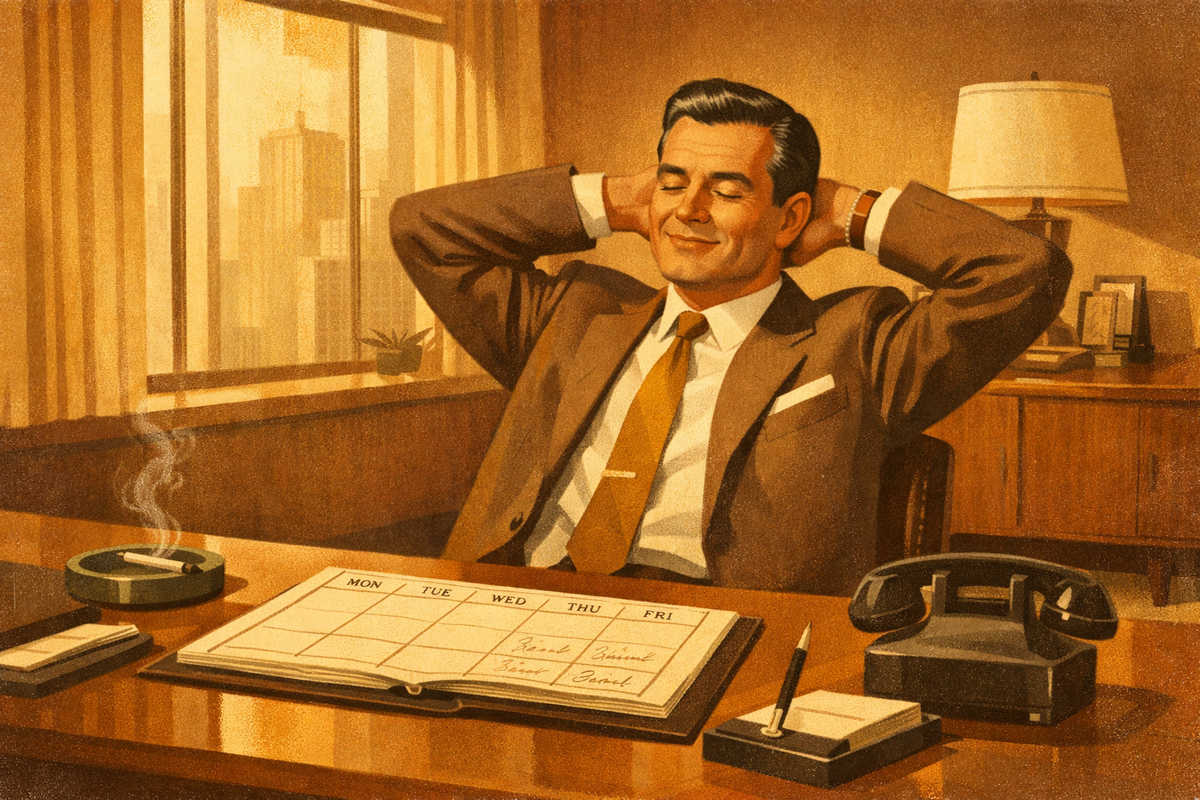
I had just finished building my own personal weekly and daily schedule.
That's it. A calendar. A structure. A real operating system for my own life. And when it clicked into place, the relief was immediate and physical. Which made me stop and ask myself: what exactly just lifted?
The Cobbler's Children Have No Shoes
I've spent thirty years building systems for other people. Thousands of live events. Concert tours. Broadway productions. Immersive experiences. In every one of them, the goal was the same: design a structure so complete, so clear, so well thought through that everyone inside it could stop thinking about the system and start doing their best work.
I preached this to every founder I've ever consulted. Build the system first. Get the foundation right. Then put the right people in it and get out of the way.
And somehow, in thirty years of telling other people to do this, I had never fully done it for myself.
The Cost of Deciding
I was talking through what I'd built with my friend Jarod Soltis, trying to articulate why it felt so significant. At some point in the conversation he looked at me and said: "You know what that is? That's the cost of deciding."
He was right. And the more I sat with it, the bigger the idea got.
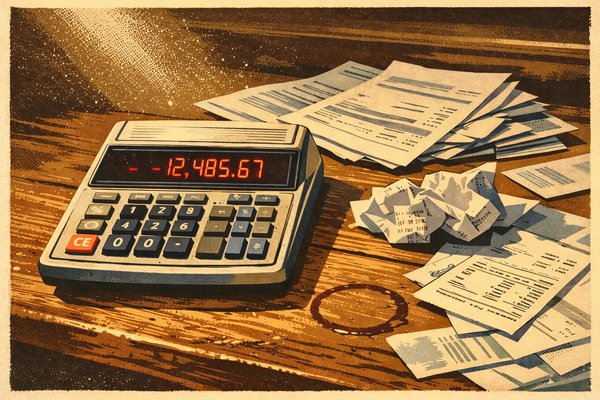
Every decision you make costs something. Not money. Not exactly time. Energy. The kind of energy that doesn't show up on any balance sheet but runs out just the same.
Here's what most leaders and founders miss: it's not the big decisions that drain you. Those get the respect they deserve. You prepare for them, gather information, sleep on them, bring in counsel. The big ones you're ready for.
It's the small ones that kill you.
What time do I take the first call? Do I work out before or after? Do I respond to this email now or batch it later? Should I eat at my desk? Is Tuesday the right day for deep work?
Each one of those questions is a small withdrawal from the same account. Make thirty or forty of them before noon and you're already running low by the time the decisions that actually matter show up.
Too Many Open Tabs
Think of it like open browser tabs. They don't just drain the battery. They take memory. They slow the processor. And eventually the whole system gets sluggish and you can't figure out why. You're not running fewer programs. You just have too many things open that you never closed. The only fix is the same whether it's your laptop or your life. You have to close the tabs. Decide, schedule, commit. And then they're gone from your working memory.
The Cost Doesn't Clock Out on Friday
Here's where most productivity thinking gets it wrong: it stops at work.
People build great professional schedules and then leave the rest of their lives completely unstructured, as if the weekend is just recovery time that takes care of itself. It doesn't. The cost of deciding doesn't clock out on Friday.
When am I going grocery shopping? When am I doing laundry? Am I actually going to meal prep this week or just figure it out? When did I last have a real meal that wasn't eaten standing over a sink? When am I seeing the people I care about?
Those questions don't disappear just because they're personal. They sit in the back of your mind all week like open tabs, quietly draining the battery. The mundane stuff, sleep, meals, laundry, social time, personal errands, carries exactly the same decision tax as the professional stuff. Sometimes more, because it nags.
A real operating system covers your whole life. Not just the hours you bill for.
Proof of Concept
About two years ago I brought on an executive assistant. At the time I kept her at about ten hours a week. Minimal, cautious, not fully committed to the idea. Even so, the return has been ten times what I pay her. Ten times. On ten hours a week.
That's not a productivity hack. That's proof of concept. The cost of deciding is so real, so measurable, that offloading even a fraction of it to the right person delivers that kind of return.
Now I've built the full system. And the first thing I did with it was hand it to her and walk away.
That's not laziness. That's the whole point. I built something clear enough, complete enough, well-defined enough that someone else can run it. Which means I'm no longer the bottleneck in my own life. I'm free to show up for the work only I can do, with a full tank, every single day.
Tim Ferriss said it better than I can: "What you don't do determines what you can do."
Your First Move
So here's your first move.
This weekend, sit down with a blank calendar and block out your entire week. Not just your work commitments. Everything. Deep work time. Call windows. Workouts. Meals. Grocery runs. Laundry. Time with people you love. Sleep. The stuff that's been living as open tabs in the back of your mind.
You don't need a perfect system on the first try. You just need to close the tabs. Make the decisions once, in advance, on paper. So you stop making them over and over again in real time, under pressure, when your energy is already lower than it was at the start of the day.
Build it clean enough that someone else could run it for you someday. That's the bar. That's when you know you're done.
Credit Where It's Due
Jarod Soltis named this for me in a conversation and handed me the title of this article. My executive assistant has been living this principle on my behalf for two years, long before I had the language for it. And Tim Ferriss laid the philosophical foundation that this whole idea rests on.
I'm just the guy who finally took his own advice.
I'm genuinely excited to see what the next few weeks do for my productivity.
And my mental health.