Pain is the Gatekeeper of Destiny
Why certain chambers of life cannot be entered until you prove you can carry what's inside them.

We misunderstand pain when we treat it as aberration: something gone wrong in the machinery of life that must be diagnosed, medicated, or overcome. This framing makes pain the villain in our story, the obstacle between us and the life we imagine we deserve. But what if pain isn't opposition at all? What if it's selection?
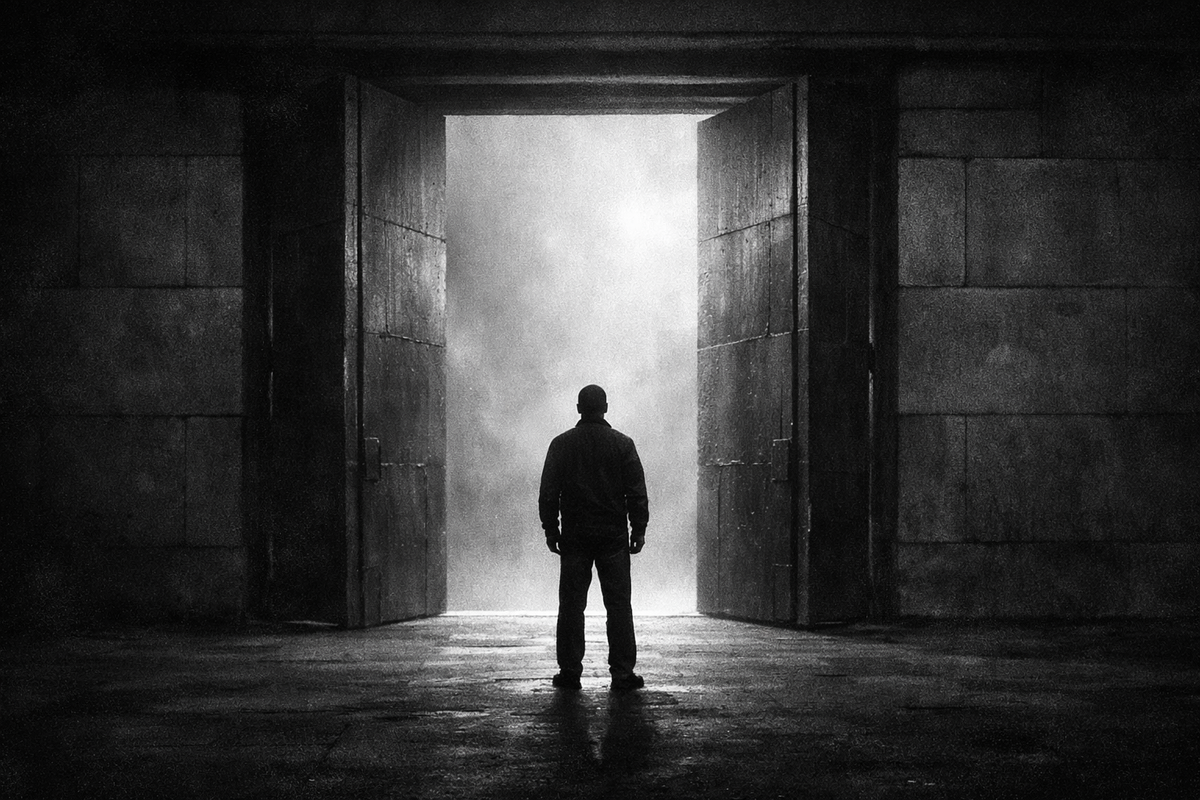
A gate doesn't exist to punish travelers. It exists to ensure only certain travelers pass through. The gatekeeper's job isn't cruelty. It's discernment. Pain operates this way in human life: not as cosmic injustice, but as a threshold mechanism that determines who gains access to the chambers beyond. Those chambers contain what we vaguely call destiny: the particular responsibility, authority, and identity that constitutes a life of genuine consequence. Pain guards those chambers because what lies within them cannot be entrusted to the unprepared.
The Logic of Thresholds
Every meaningful transition in life involves a gate. Adolescence to adulthood. Single to partnered. Employee to leader. Comfortable to vulnerable. These aren't smooth progressions but discontinuous jumps across boundaries that demand something from us. The demand is never arbitrary. It corresponds precisely to what the next chamber requires.
Consider the transition to parenthood. The physical ordeal of childbirth isn't punishment for reproduction. It's the body's way of ensuring readiness: compressing months of intellectual preparation into hours of undeniable reality. You cannot theorize your way through labor. You cannot delegate it or optimize it away. You must pass through it directly, which means you must become someone capable of passing through it. The pain doesn't ask if you deserve to be a parent. It asks if you can carry what comes next.
This is the essential function of pain as gatekeeper: it tests capacity, not worthiness. Moral desert has nothing to do with it. The question isn't whether you're good enough. The question is whether you're ready enough. Can you hold what's on the other side of this threshold without collapsing? Will you protect it or squander it? Pain has no interest in your resume or your intentions. It only measures what you can actually bear.
Identity Compression
We speak loosely about "finding ourselves," as though identity were a lost object waiting to be discovered under the couch cushions. But identity isn't found. It's forged. And forging requires heat, pressure, time. Pain provides all three.
When you suffer (genuinely suffer, not merely experience discomfort) something compresses inside you. The vague, sprawling possibility of who you might become condenses into the specific reality of who you are. You learn what you will and won't do. You discover which principles survive contact with actual stakes. The philosophical positions you held casually in times of ease either crystallize into conviction or evaporate entirely.
This compression has a paradoxical quality. It narrows you. Certain paths close permanently when you choose to endure rather than abandon, to protect rather than flee. But it also clarifies you. The person who emerges from sustained difficulty has shed layers of pretense and speculation. What remains is more real, even if it's smaller than the fantasy was. You become less of what you imagined and more of what you actually are.
This is why people who've suffered deeply often seem more present than those who haven't. They're not better people morally, but they're more thoroughly themselves. The pain didn't improve them. It removed everything that wasn't load-bearing. What you see is the structure that could actually hold weight.
The Moral Architecture of Consent
Here's where pain's gatekeeping function reveals its strange wisdom. You cannot access certain forms of authority or responsibility without first demonstrating you're willing to suffer for them. Not willing to endure suffering if it happens to arrive, but willing to accept suffering as part of the bargain knowingly and in advance.
This is different from martyrdom or masochism. It's closer to what we might call informed consent with reality. The parent who stays up through fevered nights. The leader who absorbs criticism meant for their team. The artist who endures obscurity and self-doubt. The person who remains faithful to someone whose mind is slowly vanishing to disease. None of these situations involve suffering for its own sake. They involve accepting suffering as the admission price for something else: something that cannot exist without that acceptance.
The gatekeeper's question is always the same: Are you willing? Not "are you capable" (that will be tested later). Not "do you deserve this" (that's not relevant). Just: Are you willing to pay what this costs? Because if you're not, the gate remains closed. Not as punishment, but as protection: protection of what lies beyond the gate from someone who would damage it, and protection of you from responsibilities that would crush you.
This creates a kind of moral architecture. The things that matter most in life (deep relationships, meaningful work, lasting impact, genuine authority) all sit behind gates that pain guards. You can only access them by demonstrating willingness to suffer on their behalf. This isn't arbitrary hazing. It's structural necessity. These things require caretakers who won't abandon them when the cost becomes clear. Pain identifies who those caretakers are.
The Timing Problem
Pain doesn't just filter who passes through. It also controls when. This is perhaps its least understood function. We want access to our destiny immediately, as though readiness were a binary state we could achieve through determination or insight. But readiness unfolds in time. You cannot rush it any more than you can rush the growth of an oak from an acorn.
The young man who wants to lead before he's learned to follow. The artist who demands recognition before she's developed craft. The person who wants the deep marriage without the years of small deaths that make such intimacy possible. In each case, the desire is real and the vision may be accurate. What's missing is the capacity that only time and difficulty can build.
This is why premature success often destroys people. They gain access to chambers their character can't yet inhabit. The authority, the resources, the attention: these things require structural integrity to hold, and that integrity is built through accumulated suffering. Give someone power before pain has tested them, and you'll watch them buckle under its weight. Give someone love before they've learned to endure the vulnerability love requires, and they'll sabotage it to return to safer ground.
Pain's gatekeeping isn't just about whether you pass through but when you pass through. It holds you back until you're ready, regardless of how ready you think you are. This feels like cruelty in the moment. In retrospect, it often looks like mercy.
The Intelligence of Resistance
If pain is a gatekeeper, then it possesses a kind of intelligence. Not consciousness, but functional wisdom embedded in its operation. It knows things about you that you don't know about yourself. It reveals limits you weren't aware you had. It asks questions you weren't prepared to answer.
This intelligence manifests as resistance. When you approach a gate you're not ready to pass through, pain intensifies. Not randomly, but specifically in proportion to the gap between what you can currently carry and what the next chamber requires. The resistance calibrates itself to your actual capacity, not your imagined capacity.
Most of us experience this resistance as evidence that we're on the wrong path. We interpret pain as a sign to turn back, to find an easier route, to reconsider whether we really want what we thought we wanted. Sometimes that interpretation is correct. Some gates genuinely aren't meant for us. But often, the resistance is precisely the mechanism by which the gate determines if we're ready. It increases until we either develop the capacity to bear it or we retreat. Both outcomes serve the gate's function.
The person who pushes through discovers something unexpected: the pain doesn't necessarily decrease on the other side. Often it increases, because what lies beyond the gate demands more, not less. But something else changes. Your relationship to the pain shifts. It stops being opposition and becomes information. It tells you when you're approaching the edges of your capacity. It warns you when you're about to betray something essential. It signals when you need to grow or when you need to ask for help.
Consider Job, who spent most of his suffering demanding explanation. Why me? What did I do? Where is the justice in this? His friends insisted he must have sinned. Job insisted he hadn't. Both were asking the wrong question. When God finally responds, it's not with justification but with a demonstration of how little Job understands about the architecture of reality. "Where were you when I laid the foundations of the earth?" The answer isn't an answer. It's a reframe.
The pain wasn't there to be explained. It was there to be endured in a way that would transform the person doing the enduring. Job passes through the gate not when he receives his explanation, but when he stops demanding one and accepts the reality of what he's carrying. The shift from "why is this happening?" to "what am I being prepared for?" is itself the passage through the threshold.
This is the test most people fail: they stay locked in negotiation with their suffering, demanding it justify itself, prove its fairness, explain its logic. But pain doesn't answer to those demands. It simply continues applying pressure until you either develop the capacity it's testing for or you break. The people who pass through are the ones who stop arguing with the gate and start asking what it's revealing.
In this way, pain becomes less like a gatekeeper who says "you shall not pass" and more like a gatekeeper who says "not yet, unless you're willing to become someone who can."
What Destiny Actually Requires
We romanticize destiny as though it were a gift waiting to be unwrapped: your true calling, your highest purpose, the life you were meant to live. This framing makes destiny sound appealing, even comfortable. But genuine destiny is burden as much as blessing. It's the particular weight you were built to carry, the specific problems you were shaped to solve, the unique suffering you're equipped to endure.
This is why destiny requires gates. Without them, people would claim responsibilities they cannot sustain, attempt missions they're not prepared for, seek authority they lack the character to wield properly. The gate ensures fit between person and destiny. Pain serves as the proving ground.
Consider what substantial responsibility actually entails. Leading others means absorbing their mistakes and shielding them from consequences while they learn. Creating meaningful work means enduring the gap between vision and execution, sometimes for years. Building anything that lasts means choosing the relationship or the project or the principle over your own comfort repeatedly, in small moments when no one's watching and nothing external compels you.
These things don't require perfect people. They require people who've been tested enough to know they won't abandon their post when tested further. Pain provides that test. It identifies who will stay and who will leave, who will protect what they've been given and who will squander it, who has the structural integrity to bear weight and who will collapse.
The Question That Remains
If we accept pain as gatekeeper rather than enemy, the entire relationship transforms. You stop asking "why is this happening to me?" and start asking "what is this preparing me for?" You stop seeking to eliminate suffering and start seeking to understand what it's revealing about the gap between who you are and who you need to become.
This doesn't make the pain less real or less difficult. It remains pain: sharp, exhausting, sometimes unbearable. But it ceases to be meaningless. It becomes the threshold itself, the actual mechanism of transformation rather than an obstacle to transformation.
At every significant turning point, pain shows up asking the same question: Are you willing to carry what comes next? It doesn't ask if you're perfect enough or strong enough or worthy enough. It asks if you're willing. Because willingness is the hinge on which everything else turns.
The gate doesn't open for those who deserve what lies beyond. It opens for those who demonstrate they won't abandon it once they gain access, and that demonstration can only be made through enduring what the gate requires.
This is what makes pain a gatekeeper rather than a barrier. Barriers block passage. Gates permit passage to those who meet the terms. The terms are always the same: you must become someone capable of protecting what you're being given access to. Pain ensures this happens by refusing to let you through until you have.
In the end, destiny isn't something you discover or achieve. It's something you prove you can carry.