Working Hard Keeps You Broke
Do The Math First, Then Change the World!

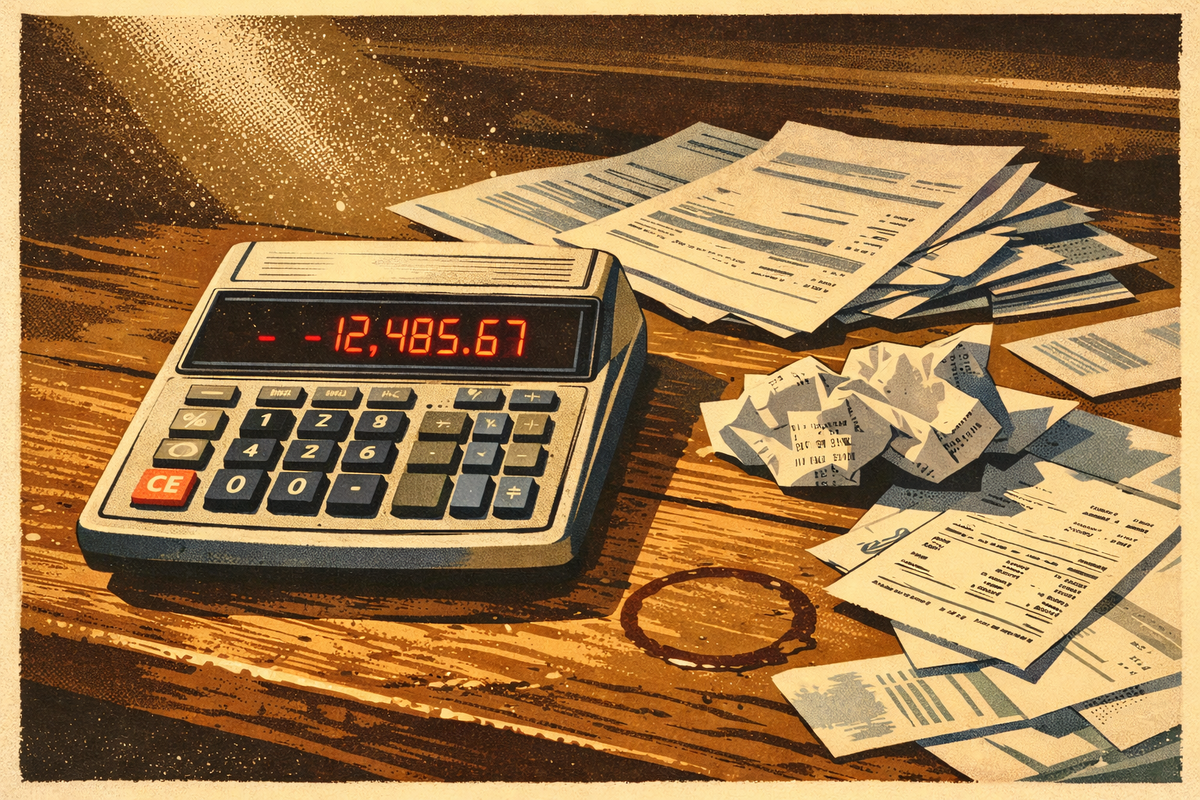
Brilliant founders are killing brilliant ideas by moving too fast.
I see world changing ideas die before they ever get to change the world.
And it breaks my heart.
Because I can see what these ideas could become. I can see the lives that could be transformed, the industries that could be reshaped, the suffering that could be alleviated.
And I'm watching founders choose speed over foundation, and kill it all.
The Conversation That Haunts Me
The following is a composite of conversations I've had repeatedly. Not one specific founder, but the pattern I see constantly. The details change, but the story is always the same.
A founder comes to me months after shutting down.
World changing idea. Genuinely. The kind where you think "in ten years, this will be obvious and everyone will wonder why it took so long."
They had launched fast. No foundation. Just passion and hustle.
And for months, it kind of worked. They were helping people. Getting traction. Press was interested.
Then the foundation cracks became chasms:
- IRS penalties for wrong entity structure
- Personal liability for business debt wiped out savings
- Burnout from 80 hour weeks because they'd priced with no margin to hire
- Quality slipped from exhaustion, reputation damaged, referrals stopped
- Cash flow crisis from the gap between delivery and payment
They shut down.
Not because the idea was wrong. The idea was RIGHT.
But because the foundation couldn't support the weight of the transformation they were trying to create.
And here's what they say:
"I thought the urgent need meant I couldn't afford to wait."
Sometimes they add: "Nobody told me this stuff mattered. Everyone said 'just start.' I didn't even know what I didn't know."
And they're heartbroken.
Because they still see the gap. They still see the suffering their idea could have alleviated. They still know it could have worked.
But the window closed. The moment passed. The idea died.
Not because it couldn't work. Because they built it on sand.
And because nobody told them sand wasn't enough.
I've had this conversation too many times. And every time, it breaks my heart.
The Lie You're Telling Yourself
"I'm going to make so much money with this."
You've done the math in your head:
- 100 customers × $1,000/month = $100,000/month
- $1.2 million a year!
- I'll be rich!
What you haven't calculated:
- What it actually costs to acquire those customers
- What it actually costs to deliver the service
- What it actually costs to manage the operations
- What people actually cost (not just salary but taxes, benefits, training, turnover)
- What your own time is worth (you're working for free and calling it "investment")
So you launch.
And you get customers.
And you're working 80 hour weeks.
And somehow there's never any money left over.
And you don't understand why.
Because nobody told you that revenue and profit are completely different things.
Because nobody told you that in service businesses, every dollar of revenue comes with 60 to 80 cents of delivery cost.
Because nobody told you that "operations and people" aren't line items you deal with later. They ARE the business.
Revenue Isn't Profit
Founders think:
- Revenue = success
- More customers = more money
- Working hard = getting ahead
What's actually true:
- Profit = success (and most don't know their real profit)
- More customers can mean LESS money (if delivery costs exceed revenue)
- Working hard without margin means working hard to stay broke
Do The Math First
Not eventually. Not "once I have revenue." Not "when I have time."
First.
Before you launch. Before you promise customers anything. Before you set your prices. Before you quit your job.
What It Actually Costs
Not what you hope it costs. What it ACTUALLY costs.
Direct delivery costs:
- Your labor at market rate (what you'd have to pay someone else to do this work)
- Materials and supplies
- Tools and equipment
Indirect operational costs:
- Administrative time (scheduling, invoicing, customer service)
- Customer acquisition cost (what you spend in marketing and sales time to get each customer)
- Software and subscriptions
- Insurance (liability, professional, property)
- Accounting and legal fees
- Space (rent, utilities, maintenance)
The timing gap:
- You deliver the service today
- Customer pays in 30, 60, sometimes 90 days
- Your bills are due this month
- This gap requires capital to bridge
Your actual time:
- 8 hours of work ≠ 8 hours you can charge for
- Factor in: admin, sales, marketing, learning, mistakes, rework
- Realistic billable time: 50 to 60% of total working hours
Add it ALL up.
Then add margin (profit left after all costs). 20% minimum, 40% ideal. So you can actually invest in growth, handle slow periods, and build something sustainable.
THAT'S your real price.
Not "what competitors charge." Not "what feels right." Not "what I think customers will pay."
What it actually costs + margin to survive and grow.
The Fantasy vs The Reality
THE FANTASY:
- Customer pays $1,000
- I do the work
- I keep $1,000
- × 100 customers = $100,000!
- I'm rich!
THE REALITY:
- Customer pays $1,000
- Delivery cost: $400 (labor, materials, overhead)
- Customer acquisition: $150 (marketing, sales time, tools)
- Operations: $100 (software, insurance, admin, accounting)
- Your time: 8 hours × $75/hour market rate = $600
- Total cost: $1,250
- You just lost $250 while celebrating $1,000 in revenue
This isn't hypothetical.
This is what happens constantly.
Founders celebrating revenue while bleeding money they don't realize they're losing.
Because they didn't calculate the real costs.
The Math Doesn't Care
The math doesn't care about:
- How passionate you are
- How hard you'll work
- How much you've already invested
- How badly you want this
- What you've already told people
- How innovative your idea is
- How underserved the market is
The math just is.
If it costs you $1,200 to deliver what you're charging $1,000 for, no amount of hustle will change that.
You'll just work really hard to lose $200 per customer.
The math should be your backstop against bad ideas.
Not your gut feeling. Not your excitement. Not your friend's encouragement.
The actual numbers.
Because here's the thing about math:
It tells you the truth BEFORE you spend two years learning it the expensive way.
It shows you:
- This price can't support this cost structure
- This delivery model can't scale profitably
- This customer acquisition cost destroys this margin
- This cash flow gap requires this much capital
All BEFORE you:
- Quit your job
- Sign a lease
- Make promises to customers
- Burn through savings
- Damage your reputation
The math is not your enemy.
The math is the friend telling you the truth when everyone else is being polite.
And if the math shows your idea doesn't work as currently conceived?
That's not failure. That's information.
Now you can:
- Adjust the pricing
- Change the delivery model
- Reduce the cost structure
- Find different customers
- Or pivot to a different idea
All before you've lost time, money, and reputation on something that couldn't work.
That's not negative. That's smart.
Calculate the real costs. Let math be your backstop.
What Foundation Actually Means
When you actually do the math, foundation stops being "boring stuff I'll deal with later."
Foundation becomes obvious necessity.
Legal structure: The right entity type (LLC, S-Corp, C-Corp) protects your personal assets when business problems arise. It matters. Without it, you're risking your house on every customer interaction.
Financial systems: Accounting that shows you where money actually goes, so you know if you're profitable or just busy. Without it, you're celebrating revenue while losing money.
Delivery systems: Documented processes that ensure consistent costs and quality, even when you're tired or training someone new. Without it, you can't scale, can't hire, can't maintain standards under pressure.
Adequate capitalization: Enough money saved to cover 12 months of personal expenses and 6 months of business operations. Money to bridge the gap between delivery and payment. Freedom to turn down unprofitable customers. Without it, you're trapped taking every customer regardless of fit.
This isn't comprehensive infrastructure.
This is minimum viable foundation. The absolute least you need to build something that can survive, scale, and sustain.
What's Actually At Stake
Your idea: Which might be genuinely transformative, or might just be good. Either way, it deserves a real shot at working. If it dies from bad math before you even know if it could work, that's a waste.
Your time and money: You're about to pour 12 to 24 months of your life and whatever capital you have into something structurally unsound. That's not noble. That's preventable.
Your reputation: In small industries, everyone knows when you fail. "Tried to start a business, didn't work out" follows you. Especially if you burned bridges, owed people money, or delivered poorly because you were overwhelmed.
The possibility: Maybe you'll try again. Maybe someone else will have a similar idea. Either way, a spectacular public failure makes the second attempt harder. Not because the idea was wrong, but because you didn't build proper foundation.
You're not thinking about any of this right now.
You're thinking: "I have an idea, I'm going to build it."
And that's fine.
But here's what you actually need to build it successfully: Real numbers. Proper structure. Adequate capital.
The Pattern I Keep Seeing
Thirty years. Three thousand events. Hundreds of businesses launched, scaled, failed, succeeded.
I can see, in the first conversation, whether you're building to last or building to collapse.
I can predict, within months, when the foundation cracks will become business-destroying crises.
I can forecast exactly which decision you're making now will destroy you within two years.
And you don't believe me.
Because you haven't lived it yet. Because your idea IS special (it is!). Because you're talented (you are!). Because you'll work harder than anyone (you will!).
And none of that matters if the math doesn't work.
The ones who didn't listen haunt me.
Every single one collapsed before they could prove the idea. Every single one had a transformative concept. Every single one showed the idea COULD work, just before foundation failure killed them.
And now their ideas are dead. Or dormant. Or someone else is doing a mediocre version because the transformative version failed and scared everyone away.
The world is less than it could have been.
Because brilliant founders killed brilliant ideas by skipping the math.
Don't be one of them.
The Conversations I Keep Having
"But I can make $100K in year one!"
"Show me the math.
Not the revenue math. The PROFIT math.
How much does it actually cost to acquire each customer? How much does it actually cost to deliver to each customer? How much does operations actually cost? How much is your time worth? What's left after all that?
Because I've seen founders celebrate $100K in revenue while losing $20K.
They're working 80 hour weeks and going backwards financially.
Show me the full math. Then let's talk about whether this works."
"But everyone says 'just start'"
"Everyone online is selling you something.
They're selling courses on 'how I made $100K in 6 months.'
They're not showing you the math of what it actually cost them.
They're not telling you how many failed first.
They're not explaining that service businesses are fundamentally different from product businesses.
'Just start' works for product businesses with venture capital.
'Just start' kills service businesses built on credit cards.
Run the numbers first. Then start."
The Real Tragedy
It's not the failed businesses.
Hundreds of businesses fail. That's entrepreneurship. Most fail. That's reality.
The tragedy is watching founders work incredibly hard for 12 to 24 months and end up with nothing.
Not because they weren't talented. Not because they didn't work hard. Not because the idea was bad.
Because they never calculated what it would actually cost to deliver on their promises.
So they:
- Priced too low (working for free without realizing it)
- Structured wrong (personal assets at risk)
- Built no systems (can't scale, can't hire)
- Undercapitalized (trapped in survival mode)
And eventually:
Exhausted. Broke. Confused.
"I had customers. I worked so hard. Where did the money go?"
It went to all the costs you didn't calculate.
Founders who could have succeeded if they had just done the math first.
The world never being changed is the real tragedy.
If You're That Founder
If you're reading this and you recognize yourself. If you have an idea that could genuinely change things and you're about to launch without doing the math. Stop.
Not forever. Just long enough to build what the idea deserves.
The world doesn't need you to be first. The world needs you to be RIGHT.
The people who need your solution don't need your heroic attempt. They need your sustainable organization.
Do the math first.
Calculate REAL costs:
- Direct delivery costs
- Indirect operational costs
- Your time at market rate
- Customer acquisition costs
- The gap between delivery and payment
Then price for reality + margin.
Then build proper structure.
Then capitalize adequately.
Then launch.
Not because I'm risk averse.
Not because I don't believe in your idea.
Because good ideas deserve proper foundation.
I Can Help
I've spent three decades helping businesses build foundation. The invisible infrastructure that lets exciting ideas actually work.
Part of that is helping founders do the math they don't want to do.
The math that reveals whether the idea can actually make money.
The math that shows what it will really cost.
The math that prevents working hard to stay broke.
If you have an idea that could genuinely matter, let's do the math together.
Before you launch.
Before you promise customers.
Before you risk everything on numbers you haven't calculated.
Let's calculate the real costs first.
Good ideas deserve proper foundation. Foundation is built on math, not hope. Real costs. Real margin. Real sustainability. Do the math first. Then change the world.