Beyond Invisible: Designing With Audio
Sound shapes experience as fundamentally as light does. So why do we still treat speakers like something to hide?

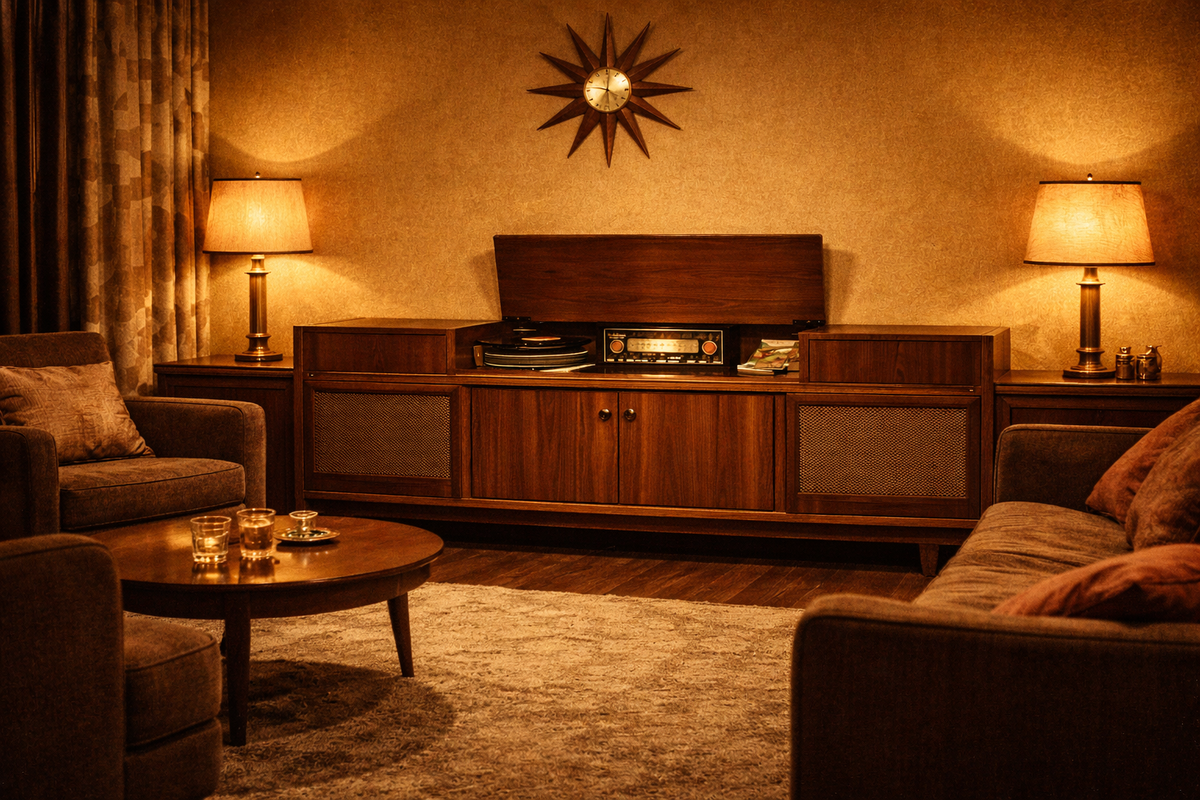
The Integration Gap
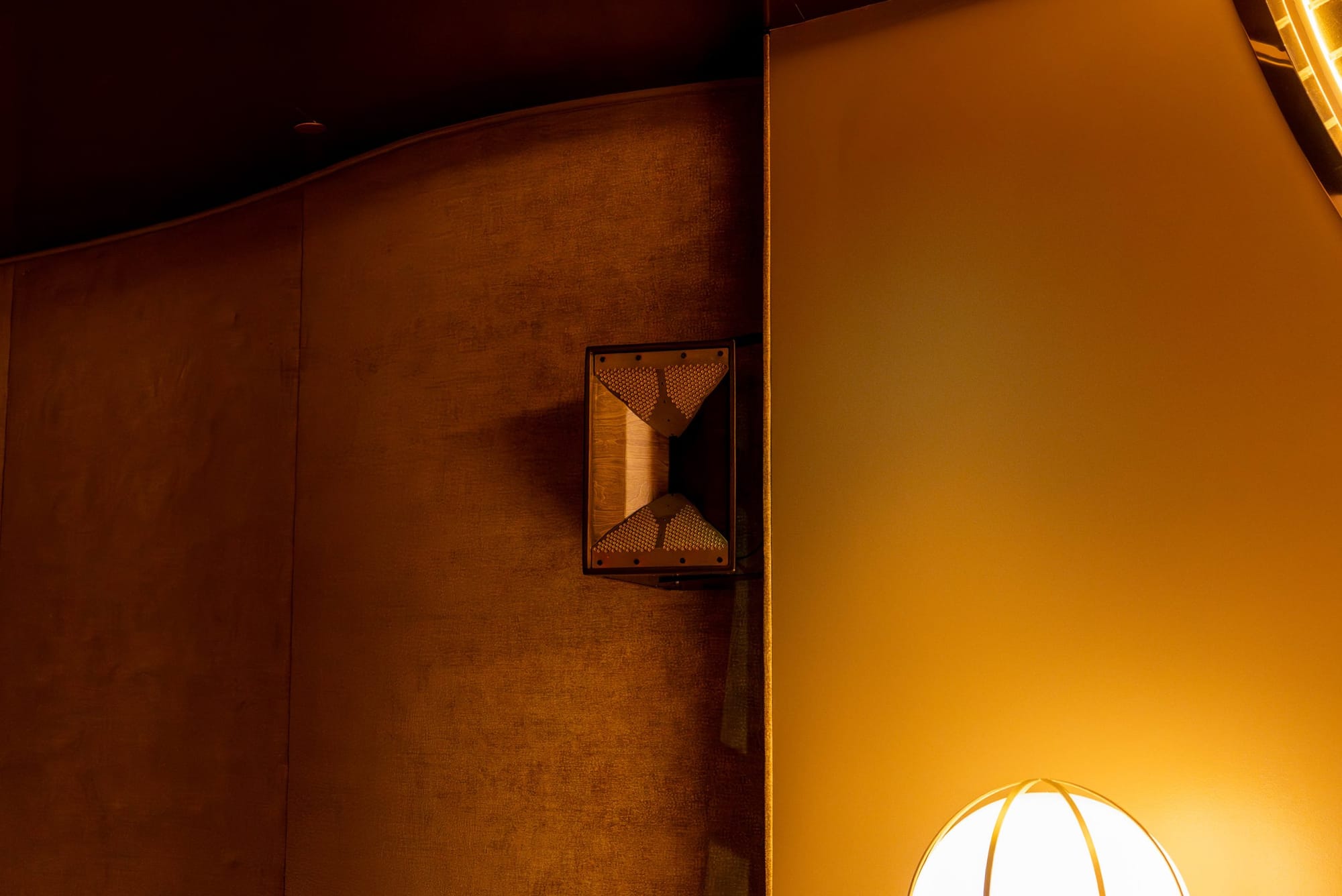
"Form follows function. That has been misunderstood. Form and function should be one, joined in a spiritual union." - Frank Lloyd Wright
Wright understood something many designers still miss about audio: the question isn't whether sound systems should be hidden or visible. The question is whether they're integrated into the design at all.
Right now, most aren't.
Architects and designers spend months selecting the perfect pendant because lighting is both functional and sculptural, technical and emotional. But audio? That gets outsourced to someone who shows up after the finishes are locked, drilling holes and running cables, making the best of decisions already made.
This is backwards.
Sound shapes experience as fundamentally as light does. It creates intimacy or energy. It defines territory. It determines whether people lean in or tune out. Yet we treat speakers like HVAC: necessary infrastructure to hide behind grilles and pretend doesn't exist.
What if we stopped pretending?
Why Spaces Exist at All
Before we talk about how to design with sound, we need to remember why we design spaces in the first place.
We don't create restaurants, hotels, theaters, and gathering places to house people. We create them to transform people, to give them 90 minutes, two hours, an evening where they escape the weight of daily existence and connect with something beautiful, meaningful, transcendent.
These are precious windows. Moments when someone forgets their mortgage payment, their difficult boss, their chronic anxiety. When they're fully present with food, music, conversation, beauty. When they remember what it feels like to be human in the best sense: connected, alive, experiencing rather than enduring.
Every design decision either protects this transformation or destroys it.
A badly placed light ruins the intimacy of a date. An uncomfortable chair cuts the evening short. And sound, poorly considered, carelessly installed, treated as afterthought, can make connection impossible no matter how beautiful everything else is.
You've been in those restaurants. Stunning design, incredible food, impossible to hear the person across the table. You leave exhausted, not energized. The space photographed beautifully but felt terrible to inhabit.
This is what happens when we design for the camera instead of the human. When we forget that people don't just see spaces. They feel them, hear them, experience them with every sense.
Holistic design isn't a nice-to-have. It's the difference between spaces that transform and spaces that merely contain.
The Invisible Orchestra
Here's what most people don't see when they experience something extraordinary: the invisible orchestra.
When you're moved by a performance, a meal, an evening that somehow becomes magical, you're experiencing the seamless coordination of dozens of professionals working in perfect harmony. The lighting designer, the chef, the servers, the sound engineer, the sommelier. Each doing their part with such precision that you never notice the work, only the result.
This is what great design does. It creates the conditions for transformation by orchestrating invisible elements into coherent experience.
Wright understood this: "The longer I live, the more beautiful life becomes." Beautiful life doesn't happen by accident. It's architected, carefully, intentionally, with attention to every element that shapes human experience.
Sound is one of those elements. Not the only one. Not even always the most important one. But always consequential.
When it's done right, it's invisible. Not hidden, but integrated so seamlessly you don't think about it. The music enhances the mood. Conversations flow naturally. The acoustic environment supports the experience you're trying to create.
When it's done wrong, it dominates everything. The beautiful meal gets overshadowed by the battle to be heard. The carefully curated ambiance gets drowned in acoustic chaos. The invisible orchestra collapses into noise.
The Emotional Architecture of Belonging
Sound doesn't just carry information. It creates emotional territory.
Consider acoustic intimacy: the distance at which you can speak normally and be heard. In a well-designed restaurant, that might be four feet. In a poorly designed one, eighteen inches. That's not a technical specification. That's the difference between connection and isolation.
Belonging takes different forms depending on the space. In an intimate restaurant, it means supporting quiet conversation. In a dance club, it means immersive sonic energy where hundreds connect through shared experience. In a hotel lobby, it means accommodating both: quiet corners and animated zones. In a theater, it means every seat experiences the performance equally.
Sound determines whether your space works with its purpose or fights against it. Whether conversations flow or demand exhausting effort. Whether music enhances mood or dominates it. Whether people want to stay or leave.
This is the difference between spaces people return to and spaces they avoid. Between environments that nourish and environments that exhaust. Between clubs that become legendary and clubs that close in a year.
The Wall Is the Speaker
Now let's talk about what's actually possible.
Start with the most provocative: specialized systems that turn entire surfaces into acoustic sources.
Not speakers mounted on walls. Not speakers hidden in walls. The wall itself produces sound. Drywall, plaster, wood panels, glass, completely invisible, no grilles, zero compromise to your design.
You design that feature wall exactly as you want it. Texture, finish, color, material. The audio system mounts behind it, unseen, turning your architectural gesture into a source of immersive sound.
Those wood slat panels creating visual rhythm? Also producing music.
The decorative plaster treatment? Generating spatial audio.
Gallery-white walls with zero visible equipment? The architecture itself performs.
This isn't a trick or a compromise. The sound quality is surprisingly good, with the entire surface acting as a driver to distribute sound naturally through the space. You're no longer asking "where do we put speakers?" You're asking "which surfaces should be acoustically active?"
Imagine a retail environment where immersive soundscapes emerge from gallery-clean walls. A restaurant where the architecture produces ambient sound without any visible equipment. A hotel lobby where music fills the space without a single speaker in sight.
This is designing with sound as an architectural medium, not working around it as a technical requirement.
Sonic Sculpture
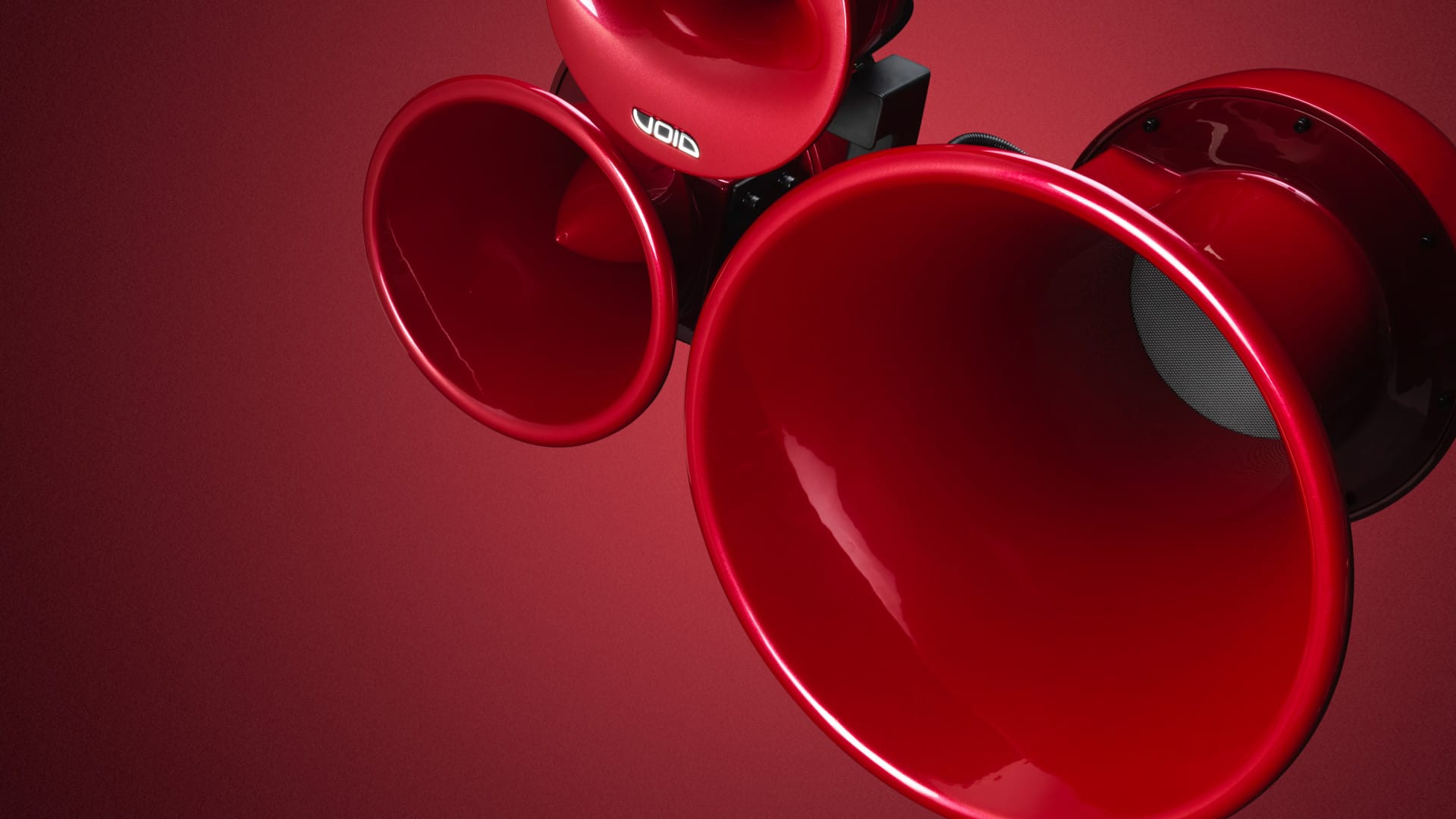
But invisibility isn't always the goal. Sometimes sound should have presence, weight, and sculptural impact.
Void Acoustics creates what can only be called sonic sculpture. Their Air Series consists of geometric forms with material presence and visual gravitas that happen to produce powerful, immersive sound.
These aren't speakers trying to pass as art. They're sculptural objects that perform acoustically. Bold masses that anchor space. Suspended forms that define zones. Geometric statements that create visual rhythm while producing the experiential soundtrack.
Think about how you use a major sculpture in a space, as focal point, as counterpoint, as element that creates dialogue with the architecture. These systems work the same way. They're designed to be seen, to have presence, to contribute to the spatial composition.
In venues and experiential environments where sound is the experience, this approach makes perfect sense. Why would you hide the thing that's central to the space's purpose? Why not celebrate it, make it part of the architectural statement?
Wright said: "Space is the breath of art." These systems breathe in designed environments. They own their presence rather than apologize for it. They demonstrate that form and function can achieve that spiritual union: beautiful to see, extraordinary to hear, integral to the experience.
Architectural Integration
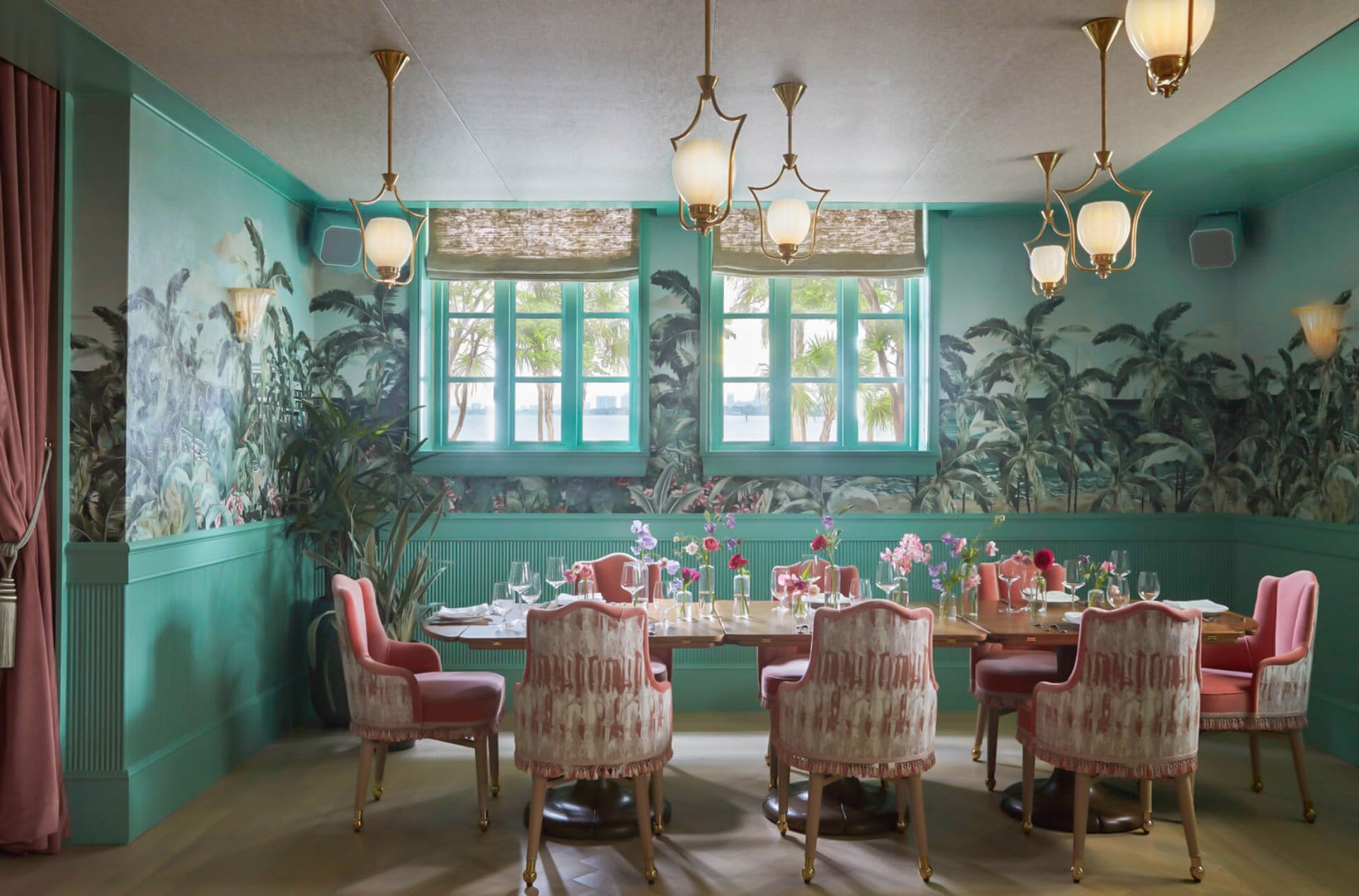
Between invisible and sculptural lies integration, audio that speaks your material language.
1-Sound builds speakers with solid wood construction, premium finishes, architectural forms. Not "speakers trying to look nice." These are crafted with the same material attention and quality as high-end furniture.
Your figured walnut? They'll match it. Powder coat to coordinate with your metal palette? Obviously. Custom finish to complement your material story? That's the point.
They integrate the way refined lighting does: surface mount, flush mount, working within your aesthetic vision rather than against it. You're not hiding equipment or accepting compromise. You're placing considered elements that happen to produce exceptional sound.
This is audio designed to belong, to feel native to the space, part of the cohesive whole rather than something bolted on despite the design.
A restaurant where speakers are hand-finished in the same wood as the millwork, same material, same craft, same language. A hotel lobby where audio elements coordinate with the lighting strategy, same attention to finish, placement, and integration. A private club where every detail reflects the same level of care and intentionality.
When audio is integrated this way, it becomes part of the invisible orchestra. You don't notice the speakers any more than you notice perfectly executed lighting. You just experience the space working beautifully as a whole.
The Full Spectrum of Intentionality
Here's the key insight: you now have real choices. Meaningful design options, not technical compromises.
Like lighting, sometimes bold (statement pendants), sometimes refined (recessed fixtures), sometimes invisible (cove lighting), audio exists across a spectrum of visibility and integration.
Bold sculptural presence when sound is central to the experience.
Seamless architectural integration when it should feel part of the vocabulary.
Complete invisibility when design purity demands it.
All valid. All intentional. All available.
The question isn't "how do we hide this?" It's "what role does sound play in this space's story?"
Some spaces want audio to whisper. Others want it to sing. Some want it completely hidden. Others want it proudly present. The point is: you're making a conscious design choice, not accepting a technical limitation.
This is what changes when audio moves from infrastructure to architecture.
What's Actually at Stake
Let's be clear about what we're really discussing.
When sound is poorly considered, spaces fail. Not technically. They might meet every code requirement, have adequate coverage. But they fail experientially.
People can't connect. Conversations demand exhausting effort. The acoustic environment creates stress rather than ease. Beautiful design gets undermined by sonic chaos.
And people leave. They don't come back. They can't articulate why. They just know the space "didn't feel right." The business struggles despite great food, beautiful interiors, strong concept.
Because transformation requires the whole orchestra. Miss one element (sound, light, comfort, flow) and the magic collapses.
But when sound is considered from the beginning, designed with the same care as every other element, something different becomes possible. Spaces where people lose track of time. Where conversations flow naturally. Where the environment supports the experience you're trying to create rather than fighting it.
These are the spaces people return to. The restaurants that become regulars' spots. The hotels that feel like coming home. The venues where something special always seems to happen.
Not by accident. By design.
Designed, Not Installed
Mies van der Rohe said "God is in the details." The critical detail here is this: audio systems are either designed or installed.
Installed means someone shows up late in the process, works around your decisions, compromises where necessary, does their best with what's left. The result might be technically adequate but will never be truly integrated.
Designed means sound is in the conversation early, during schematic design, when possibilities are open, when that wall treatment is still a sketch, when you're thinking about material vocabulary and spatial flow.
It means asking:
- Where does sound want to live in this space?
- Should it be bold or invisible?
- What surfaces are we already creating that could become acoustically active?
- What sculptural opportunities does audio open up?
- How does the sonic environment support the transformation we're trying to create?
These aren't technical questions. They're design questions. And they need to be asked by people who think like designers, not just installers following coverage patterns and meeting code requirements.
At Viation and Arkira Partners, this is the work we do. Integrating audio as architectural and experiential design from the beginning, not as technical afterthought at the end.
We specify products that match design intent. We coordinate with fabricators to integrate systems into custom elements. We ensure technical execution serves experiential vision. We think about sonic environment the way you think about light, material, and space, as fundamental elements that shape human experience.
Because the goal isn't "good audio in your beautiful space."
The goal is space designed holistically, where sound and sight and material and form are considered together, not sequentially. Where every element of the invisible orchestra is working in harmony. Where the 90 minutes someone spends in your space has a chance to actually transform them.
The Spiritual Union
Wright's insight about form and function joining in spiritual union wasn't about aesthetics. It was about integrity. About creating things that are wholly themselves, where every element serves both practical purpose and deeper meaning.
This is what separates spaces that merely function from spaces that resonate.
A chair that's only comfortable isn't enough. It needs to be beautiful. A pendant that's only beautiful isn't enough. It needs to illuminate properly. And a speaker that only produces sound isn't enough. It needs to belong to the space architecturally, materially, experientially.
When these elements achieve unity, when the thing that works is also the thing that's beautiful, when form and function truly become one, we create environments that do more than contain people. We create spaces that elevate and connect them.
This is the opportunity with audio right now. The technology has caught up. The products exist. The thinking exists.
What's missing is simply awareness. Designers don't know these possibilities are available because the audio industry has been speaking the wrong language, talking about specs and coverage patterns instead of design integration and experiential outcomes.
But once you see it, once you understand that audio can be architectural, sculptural, invisible, integrated, intentional, the question becomes not whether to design with sound, but how.
What You Create Next
A restaurant where speakers are hand-finished to match your millwork, same material, same craft, same language.
A hotel lobby where sonic sculpture doubles as spatial divider, defining zones acoustically and architecturally in one gesture.
A private club where coffered ceilings house invisible audio, no grilles, no compromise, just sound emerging from architecture itself.
A retail environment where walls produce immersive soundscapes while maintaining gallery-clean aesthetics.
A venue where bold sculptural audio systems become part of the spatial statement, owning their presence while delivering transformative sound.
This isn't fantasy. This is what's possible when audio stops being infrastructure and becomes architecture. When sound joins the invisible orchestra instead of working against it. When we design for transformation, not just function.
The products exist. The technology exists. The thinking exists.
What you design with it, that's the only question left.
And that question is what makes this work worth doing.