A Song That Knows Your Name
A new believer asked me a question she didn’t know how to put into words: if music was my whole life, who am I now? The answer was older than her church, and older than the world itself.

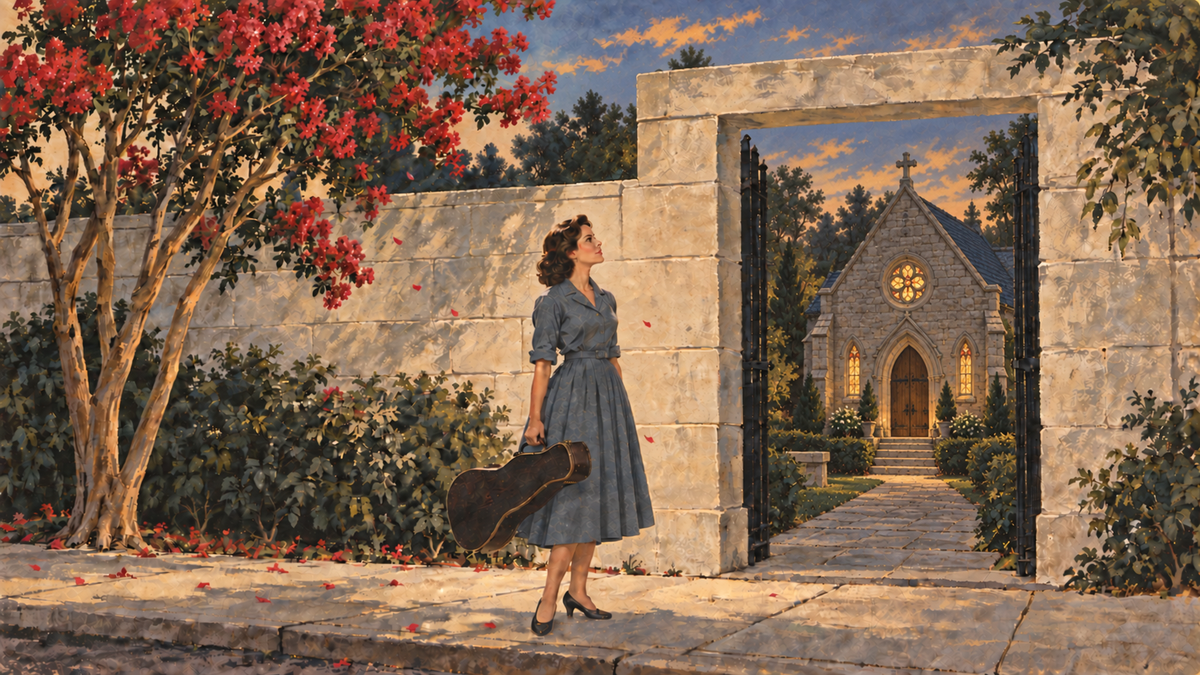
I had a conversation recently with a musician who is new to her faith. She is finding her way into a liturgical church for the first time, with all its centuries of order. For most of her life, music was the whole answer to who she was.
As we talked, a question surfaced that she hadn’t known how to put into words.
If music was my whole life, who am I now?
Faith asks for everything, and she had already given everything to music. Part of her feared she would have to choose, that belonging to God meant setting down the thing that had always told her who she was.
I told her what I believe. The Word God used to make the world was a voice, and a voice is vibration. Before there was light, there was God speaking.
It was like a light came on.
I have never felt any distance between music and God. But her question is an old one, and it deserves a full answer. Who are we when the thing we built our lives around turns out not to be the center?
In the Beginning Was a Voice
Read the first chapter of Genesis and watch how God creates. He speaks.
And God said, Let there be light: and there was light.
The pattern repeats through the whole chapter. God said, and it was so. Light, water, land, living things, and finally us, each one called out of nothing by His voice.
The Hebrew word for “word” is davar, and it also means “thing.” Hebrew thought kept no gap between the two. When God speaks, His word becomes the thing itself. The psalmist says so directly: “By the word of the LORD were the heavens made.”
John opens his gospel at that same beginning.
In the beginning was the Word, and the Word was with God, and the Word was God.
John wrote in Greek, and he chose the word logos. It meant more than a spoken word. It meant the order running through the whole universe, and Greek thinkers had used it for centuries to describe that hidden structure. John made a claim none of them saw coming: the Logos is a Person, and all things were made by Him.
With one word, John joined two worlds. In Hebrew, the word becomes the thing. In Greek, the word gives all things their order. John gives both a name.
Job adds music to the story. When God answers him out of the whirlwind, He asks where Job was when the foundations of the earth were laid, “when the morning stars sang together, and all the sons of God shouted for joy.” God’s voice came first, and creation answered it in song.
C.S. Lewis drew on this when he wrote a lion singing Narnia into being. Tolkien opened The Silmarillion with creation as a great song. Both men were drawing from the oldest account we have.
Science keeps catching up to Genesis. Every atom in the chair you are sitting on is vibrating right now, and so is every atom in your body. Nothing in creation is perfectly still. All of it moves with that first word.
The Voice Keeps Speaking
We tend to read Genesis as if God spoke once, finished the job, and went quiet, like a builder who hands over the keys and drives away.
He didn’t.
Hebrews says He is “upholding all things by the word of his power.” Paul writes, “by him all things consist.” The voice that started creation keeps it in place. If He stopped speaking, the world would stop being.
The heavens declare the glory of God.
The psalmist hears creation talking day and night with no language and no words, and its voice goes out through all the earth.
Pythagoras noticed something close to this five centuries before Christ. The notes that sound good together follow simple number patterns. Cut a string in half and you get the same note, an octave higher. He believed the whole universe was built on that kind of harmony. He was reaching for something true without knowing its name.
Shortly after that conversation, I stood in front of a limestone wall, cut into clean blocks, with an open archway framing the building beyond it. Right beside the stone, a crepe myrtle was in full bloom, bright red against the gray.
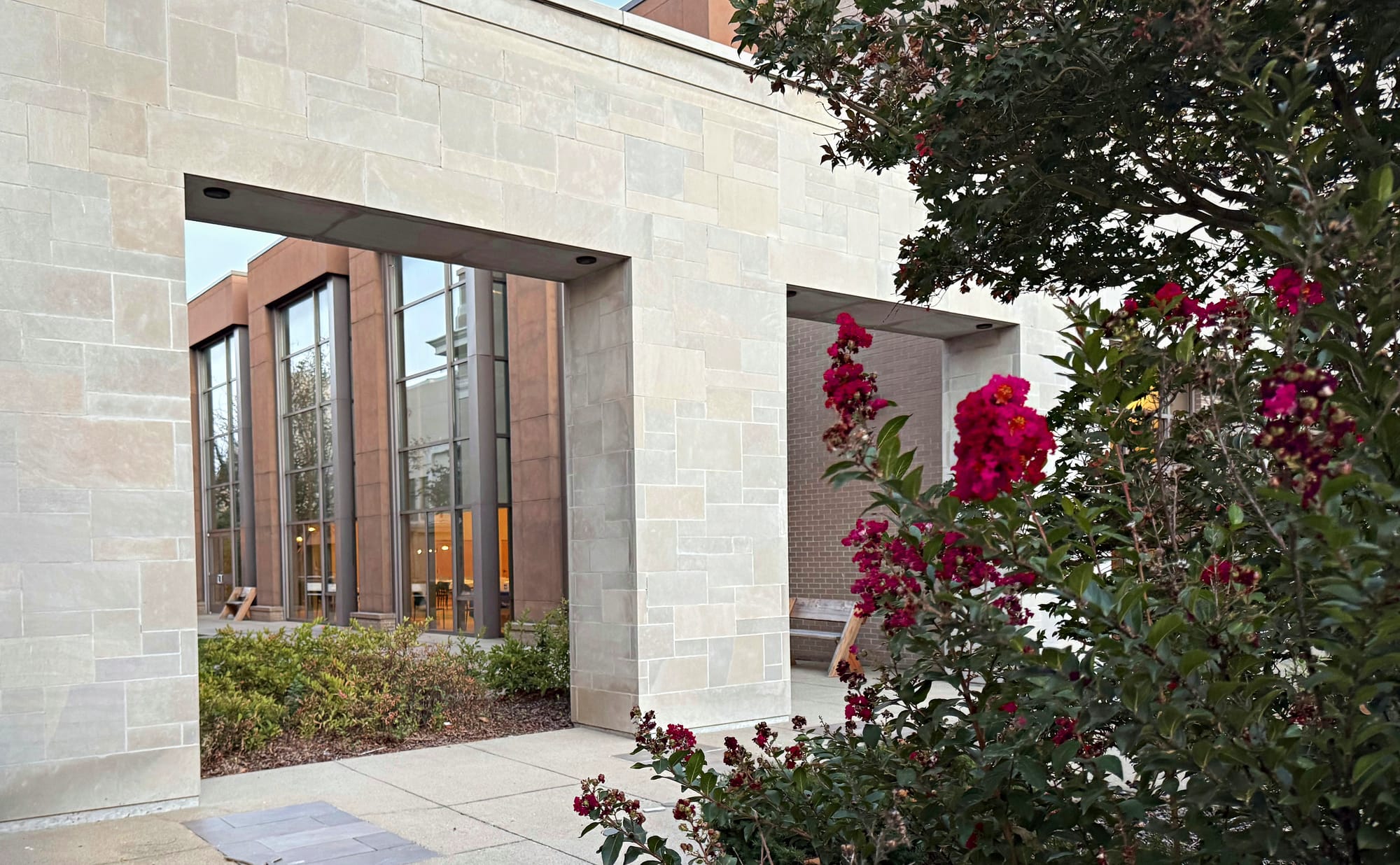
Human hands shaped one. The other grew on its own. They stood a few steps apart, and both of them were speaking.
The wall spoke of patience and the masons who set every block. The flower spoke of life no one planned or placed. Neither was more holy than the other. His voice was in both.
Standing there, I thought about her, and about the question she had carried into our conversation.
To question is human. We are the only part of creation that asks why. The hills don’t ask, and the crepe myrtle doesn’t ask. They answer by being what He spoke them to be.
That is how God answers our why, with a whole world. The hills, the trees, and the stones a mason set in place carry the vibration of the voice that made them. Even what human hands shape was given its life by Him first. Her question is our question, and the answer is all around us.
A song is separate from the singer, and Scripture never confuses the Creator with what He made. But you cannot hear a song without hearing something of the one who sang it. Paul says the invisible things of God are “clearly seen, being understood by the things that are made.” Creation is His voice, sounding.
When the Pharisees told Jesus to quiet His disciples, He answered them.
I tell you that, if these should hold their peace, the stones would immediately cry out.
Isaiah saw the same thing centuries earlier.
The mountains and the hills shall break forth before you into singing, and all the trees of the field shall clap their hands.
I believe every word. I think they are already singing.
The Word Became Flesh
John keeps going past creation. Thirteen verses later, he writes this.
And the Word was made flesh, and dwelt among us.
The voice that spoke the world into being stepped inside it. God took on skin and bone and breath, and a human voice people heard in the streets of Galilee.
That is why liturgical churches look the way they do. Water in the font, bread and wine on the altar, incense and bells and song. Some see all of that as a distraction from the spiritual. The early church believed that if God became flesh, the physical world is where the holy chose to meet us.
The tradition she is walking into has always believed God speaks through things we can touch and hear. Music has belonged there from the beginning.
The Whisper and the Roar
Elijah went to the mountain to find God, running for his life. A great wind tore at the rocks, then an earthquake shook the ground, then a fire passed.
But the LORD was not in the fire: and after the fire a still small voice.
Most of us take that to mean God only speaks softly, that we have to get away from the noise to hear Him.
Elijah needed the whisper, and sometimes we do too. But the same God who whispered to Elijah thundered at Sinai. He speaks in the quiet and in the spectacle, and in the thing we almost missed.
He is in the silence between the prayers and in the full voice of a choir. He is in the hum of a city and the stillness of an empty sanctuary at dusk, in a stone wall and in a blooming shrub.
We have trained ourselves to expect God only in certain places and at certain hours. Liturgy, at its best, retrains us. It teaches us to listen on a schedule until we start listening all the time.
The Gift Came First
That brings me back to her question, which turns out to be all of ours.
Music started with Him before it ever reached any of us.
Every good gift and every perfect gift is from above.
We hear a melody before we play it. We feel a chord settle somewhere in the chest. None of us invented that. It was given to us, and it is made of the same thing God used to speak the world into being.
Most of us build our identity on what we do, whether that is music, business, or raising children. Those callings are real, and they matter. But when a gift becomes the foundation, it carries weight it was never built to carry. Every bad day becomes a verdict on who we are, and every quiet season feels like losing ourselves.
Scripture puts identity somewhere else.
Fear not: for I have redeemed thee, I have called thee by thy name; thou art mine.
Our identity is that we belong to Him. Our gifts are what He gave the ones He named. Faith lifts the crushing weight off the gift and tells us where it came from.
That frees the gift too. When our worth doesn’t ride on the next song, we can play it as a gift.
Luther saw it.
Next to the Word of God, music deserves the highest praise.
Bach lived it. At the end of his scores he wrote three letters: S.D.G., Soli Deo Gloria, to God alone the glory. The greatest composer who ever lived treated his gift as an offering.
And the God we fear competing with is the same God the prophet Zephaniah says “will joy over thee with singing.” He sings over us.
U2 closed an album with a song about grace, and Bono opened it by giving grace a face.
Grace, it's a name for a girl
It's also a thought that changed the world
Grace keeps no score of what we’ve earned. The old wounds she touches stop hurting, and what was ugly becomes beautiful.
That is the gift we have been given, and it came with a name. The music we make was always His to give.
We don’t have to choose between who we were and who we are becoming. Every time she plays, and every time we use what He placed in our hands, the gift goes back to the One who gave it.
The church she is walking into has done exactly that for centuries, in chant and response, in silence and song. Liturgy is ordered sound, God’s people giving His voice back to Him in the form He gave it. She brings her music through those doors and joins a song already underway.
He spoke, and the world began. He took on flesh and spoke among us. His voice sounds in stone and bloom, in the hush and the song, and in us.
He never went quiet. The only question is whether we are listening.